
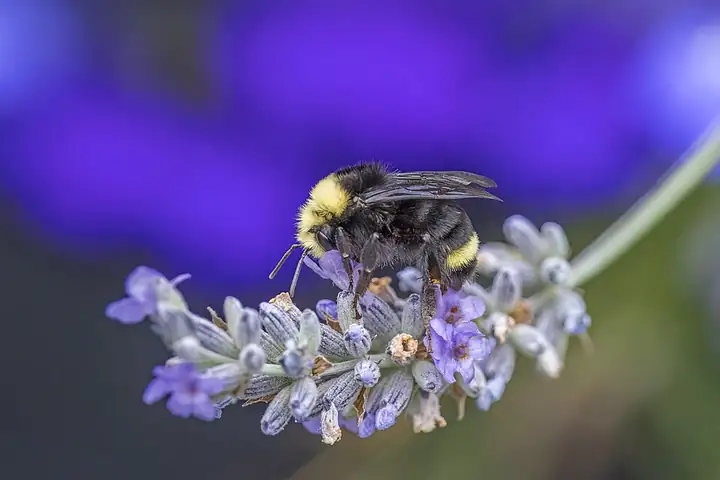
Bumble bees
Bombus species; about 45 are native to North America, such as the common eastern bumble bee (B. impatiens) and the yellow-faced bumble bee (B. vosnesenskii)
| Type | Insect |
|---|---|
| What it does | Pollinator |
| When | Early spring through fall; only new queens survive winter, underground |
| How common it is by region | Very common here: Northeast, Southeast, Midwest, Great Plains, Mountain West, Pacific Northwest, California, Alaska |
About
Bumble bees are big, round, fuzzy bees that live in small yearly colonies. They 'buzz pollinate,' shaking pollen loose from flowers such as tomatoes, peppers and blueberries.
This one is already on your side. Broad sprays kill it along with the pest, which is why the guide puts sprays last.
What it eats
They gather nectar and pollen from many flowers. By vibrating their flight muscles they release pollen that other bees cannot get, which helps tomato, pepper, blueberry and cranberry crops.
Spotting it
How to find it early
Look for a large, very hairy bee banded in black with yellow, white or orange, bumbling from flower to flower. Big queens appear first in early spring.
Its young
Larvae are white grubs in wax cells inside a small nest, often in an old rodent burrow, compost pile or clump of grass.
When
Early spring through fall; only new queens survive winter, underground
Easy to mistake for
- Carpenter bees — Bumble bees have a hairy, striped abdomen and nest in the ground; carpenter bees have a shiny, bare black abdomen and bore into wood.
- Robber flies — Bumble bees have two pairs of wings and work flowers; bee-mimic robber flies have one pair, big fly eyes and perch to ambush prey.
Bringing more of them in
Plant flowers from early spring to fall, such as flowering trees, bee balm, purple coneflower, asters and goldenrod. Leave some undisturbed, messy corners for nests and avoid broad-spectrum sprays.
Plants that bring it in
Aster, Bee balm, Cherry (sweet and tart), Goldenrod, Purple coneflower (echinacea)
Worth knowing
Bumble bees rarely sting while feeding, but they will sting more than once to defend a nest. Stings hurt but are usually not dangerous unless you are allergic or stung near the head or neck. Leave nests alone or fence them off for the season, and check for protected species such as the endangered rusty-patched bumble bee before any treatment.
How common it is by region
| Northeast | Very common here |
|---|---|
| Southeast | Very common here |
| South Central | Common here |
| Midwest | Very common here |
| Great Plains | Very common here |
| Mountain West | Very common here |
| Southwest | Common here |
| Pacific Northwest | Very common here |
| California | Very common here |
| Alaska | Very common here |
| Hawaii | Not found here |
Sources
- ohioline.osu.edu
- hortsense.cahnrs.wsu.edu
- extension.okstate.edu
- extension.umn.edu
- uaf.edu
- scholarspace.manoa.hawaii.edu
Photo: Photo: Charles J. Sharp / Wikimedia Commons, CC BY-SA 4.0 (CC BY-SA 4.0). Photo resized for the web.

Planting dates and advice are general guidance; check with your local Cooperative Extension office for your area.