
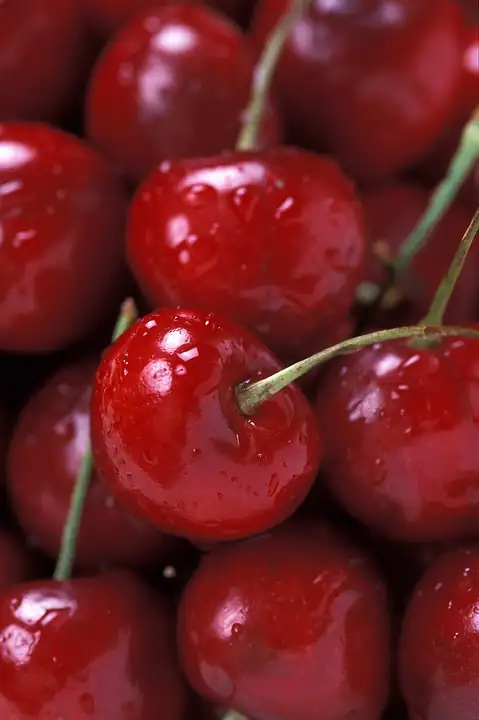
Cherry (sweet and tart)
Prunus avium (sweet cherry) and Prunus cerasus (tart, sour or pie cherry) · Rose family (Rosaceae)
When to plant: Set out plants up to 4 weeks before the last frost.
| Hardiness zones | 3 to 9 |
|---|---|
| Sun | full sun |
| Water | moderate |
| Life cycle | perennial |
| Frost | Hardy: takes frost |
| Soil pH | 6.0–7.0 |
| Spacing | 144 to 300 inches |
About Cherry (sweet and tart)
Tart cherries are compact, cold-hardy, self-fruitful trees, a good fit for small yards; they are mostly used for pies and jams. Sweet cherries are bigger trees for fresh eating that usually need a pollination partner and crack in rainy weather at ripening.
Tart cherries suit zones 4-8 and sweet cherries zones 5-9 (Penn State), and the hardiest tart varieties rate good in zone 3 (University of Minnesota). Most sweet cherries need 600-900 chill hours below 45 F (UC Master Gardeners of Marin).
When to plant
Timing is counted from your average last spring frost (and first fall frost). Sow & Tell works out the actual dates for your ZIP code.
- Set out plants: up to 4 weeks before the last frost
Plant a 1-year-old tree in early to mid-spring as soon as the soil can be worked, with the bud union 1-2 inches above ground (Penn State). Tart cherries start bearing in 3 to 5 years and sweet cherries in 4 to 7 (Penn State); dwarf tart trees stay 8-15 feet tall (University of Minnesota).
Soil
Deep, well-drained loam with excellent air circulation; avoid very sandy, heavy or wet soils.
Aim for a pH of 6.0 to 7.0 in well-drained soil, and clear perennial weeds before planting.
Feeding
- Each spring (May in New England) from the second year on, only if growth is weak (tart cherries often bear in 3-5 years, sweet cherries in 4-7): balanced fertilizer such as 10-10-10, or compost. About 1/2 lb of 10-10-10 for young trees and 1 lb for bearing trees, spread from the drip line to about 16 inches from the trunk; follow a soil test.
Look for: mostly nitrogen, in spring as growth starts. Spring feeding grows the new shoots and leaves that carry flowers and fruit; feeding after midsummer pushes soft growth that may not harden before winter.
Never fertilize a tree that is already growing well, and do not feed in late summer or early fall, which raises the risk of frost cracks.
Harvest
Cherries ripen from May through July depending on climate and variety; pick them with the stems attached (UC Master Gardeners of Marin). Birds find ripe cherries quickly (UNH, Penn State). Pick sweet cherries promptly, since they crack with heavy rain as they ripen (University of Maryland).
Cherries give one crop a year, and each tree's harvest season is short. Pick them ripe from the tree, since they don't ripen further after picking.
Varieties (32)
| Variety | Type | Season and days | Zones | Notes |
|---|---|---|---|---|
| Bing | Sweet cherry | Midseason | 5–9 | Very large, sweet, juicy fruit; dark burgundy skin that looks almost black when ripe. The commercial standard. Not self-fertile. Will not pollinate Lambert or Royal Ann. Sources: [1][8] |
| Black Tartarian | Sweet cherry | Early | 5–9 | Small to medium, purplish-black, soft and juicy. An older variety, mostly planted now as a pollinizer. Needs a compatible partner. Sources: [1][8][9][10] |
| BlackGold | Sweet cherry | 5–9 | Dark sweet cherry. Blooms late and has some frost tolerance. Self-fruitful. Sources: [1][5][11] | |
| Cavalier | Sweet cherry | Very early (early June in Virginia) | 5–9typical for sweet cherry | Black fruit with firm, dark red flesh and good flavor. Resistant to cracking. Needs a compatible partner. Sources: [1][9] |
| Chelan | Sweet cherry | About two weeks before Bing | 5–9 | Large, firm, round fruit with dark mahogany skin; juicy red flesh. Vigorous, upright tree. Needs a pollinizer. Sources: [1][8] |
| Hartland | Sweet cherry | Mid-June in Virginia | 5–9typical for sweet cherry | Round purple fruit with good flavor. Productive, but fairly prone to cracking. Sources: [1][9] |
| Hedelfingen | Sweet cherry | Late June in Virginia | 5–9typical for sweet cherry | Black, firm, high-quality fruit. More crack-resistant than most. Good fresh, frozen or processed. Needs a compatible partner. Sources: [1][5][9] |
| Hudson | Sweet cherry | Late (about June 25 in Virginia) | 5–9typical for sweet cherry | Sweet, very firm, dark red fruit. Very resistant to cracking. Blooms late; vigorous. Needs a compatible partner. Sources: [1][9] |
| Kristin | Sweet cherry | 5–9typical for sweet cherry | Large, firm, sweet, aromatic dark red fruit. Vigorous and productive. Moderately crack-resistant. Self-sterile; will not pollinate Ulster. Sources: [1][9] | |
| Lambert | Sweet cherry | 5–9 | Very large, heart-shaped, black fruit with dark, sweet flesh. Hardy, vigorous tree. Will not cross-pollinate with Bing or Royal Ann. Sources: [1][8] | |
| Lapins | Sweet cherry | Mid-June in Virginia | 5–9 | Very large, dark purple to black fruit with firm, sweet flesh. Heavy cropper; upright tree. Somewhat resistant to cracking. Self-fertile and a good pollinizer for other sweet cherries. Sources: [1][5][8][9][11] |
| Stella | Sweet cherry | Mid-June in Virginia | 5–9 | Large, heart-shaped, nearly black fruit; sweet, firm, dark red flesh. Bears young. Sources differ on cracking: Virginia Tech and Nebraska call it prone; Utah State calls it resistant. Self-fertile and can pollinate any other sweet cherry. Sources: [1][8][9][10][11] |
| Sweetheart | Sweet cherry | 5–9 | Large, very firm, dark red fruit with very good flavor. Upright, vigorous, heavy-bearing tree. Moderately prone to cracking. Self-fertile; can pollinate other sweet cherries. Sources: [1][8][9] | |
| Ulster | Sweet cherry | Mid-June in Virginia | 5–9typical for sweet cherry | Large, sweet, crisp dark red fruit. Moderately crack-resistant. Not compatible with Kristin. Sources: [1][9] |
| Utah Giant | Sweet cherry | 6–9 | Larger and sweeter than Bing; dark red flesh keeps its color when processed. Disease resistant. Needs a pollinizer such as Van or Stella. Sources: [1][8] | |
| Van | Sweet cherry | 5–9 | Medium-large, nearly black fruit with firm, semi-sweet flesh. Hardy, vigorous and productive. A strong pollinizer for other sweet cherries. Sources: [1][8][10] | |
| Emperor Francis | Sweet cherry (light-colored) | Mid-June in Virginia | 5–9typical for sweet cherry | Large yellowish-white fruit with a red blush. Not very crack-resistant. Sources: [1][9] |
| Gold | Sweet cherry (light-colored) | Early | 5–9typical for sweet cherry | Small bright yellow fruit, often used for brining. Fairly resistant to cracking and to bacterial canker. Nebraska calls Yellow Glass/Gold the hardiest sweet cherry. Sources: [1][9][11] |
| Rainier | Sweet cherry (light-colored) | 5–9 | Large, firm, golden fruit with a red blush; sweeter and less acidic than Bing. Vigorous, hardy and productive. Cracking reports vary by region. A good pollinizer for most sweet cherries, but needs a partner itself. Sources: [1][8][9][10] | |
| Royal Ann | Sweet cherry (light-colored) | Midseason | 5–9 | Crisp, sweet-tart fruit; golden skin with a red blush. Resists cracking. Good fresh, canned or preserved. Needs a pollinizer; Bing and Lambert will not work. Sources: [1][8] |
| WhiteGold | Sweet cherry (light-colored) | 5–9 | Large yellow fruit with a red blush. Very hardy tree. Self-fruitful. Sources: [1][11] | |
| Minnie Royal | Sweet cherry (low-chill) | One of two low-chill sweet cherries listed for Texas. 200 chill hours Sources: [12] | ||
| Royal Lee | Sweet cherry (low-chill) | One of two low-chill sweet cherries listed for Texas. 200 chill hours Sources: [12] | ||
| Balaton | Tart (sour) cherry | 4–8typical for tart cherry | Larger, firmer, sweeter and redder than Montmorency, with juicy flesh. Self-fertile, like all common tart cherries. Sources: [1][9] | |
| Danube | Tart (sour) cherry | A few days before Montmorency | 4–8typical for tart cherry | Dark red, medium to large, and sweeter than most tart cherries. Self-fertile, like all common tart cherries. Sources: [1][9] |
| Evans (Bali) | Tart (sour) cherry | Mid-July | 3–8 | Large, bright red fruit that sweetens if left on the tree; small pits. Extremely cold-hardy. Self-fertile, like all common tart cherries. Sources: [1][4] |
| Mesabi | Tart (sour) cherry | Late June to early July | 4–8 | A bit sweeter than most tart cherries; bright red skin, pale red flesh. Self-fertile, like all common tart cherries. Sources: [1][4][10] |
| Meteor | Tart (sour) cherry | Early July, a few days after Montmorency | 4–8 | Bright red, tart, semi-firm fruit with clear juice. Extra-hardy natural dwarf, 10-12 ft. Blooms later than most. Some leaf spot resistance. Self-fertile, like all common tart cherries. Sources: [1][4][5][9][11] |
| Montmorency | Tart (sour) cherry | Late June | 5–8 | Bright red, firm fruit with clear juice; the classic pie cherry. Very cold-hardy. Less prone to cracking than sweet cherries. Self-fertile, like all common tart cherries. Sources: [1][5][9][10][11] |
| North Star | Tart (sour) cherry | Late June to early July | 4–8 | Dark red skin and red flesh with mahogany juice. Natural dwarf, about 6-10 ft, so it is easy to net. Some resistance to leaf spot and brown rot. University of Minnesota release (1950). Self-fertile, like all common tart cherries. Sources: [1][4][5][9][11] |
| Suda | Tart (sour) cherry | Late July | 4–8 | Deep red with the darkest juice of the tart cherries. Great for processing and freezing. Harder to find than other tart cherries. Self-fertile, like all common tart cherries. Sources: [1][4][10] |
| Surefire | Tart (sour) cherry | 4–8typical for tart cherry | Bright red, firm and very tart. Blooms late, so it is less likely to lose its crop to spring frost. Cold-hardy. Self-fertile, like all common tart cherries. Sources: [1][9] |
Pests to watch for
Cherry fruit fly, Plum curculio, Spotted wing drosophila, Peachtree borer, Birds, Pocket gophers, Sawflies (garden sawflies), Boxelder bugs, Spongy moth (formerly gypsy moth), Periodical cicadas, Obliquebanded leafroller, Pear sawfly (pearslug, cherry slug), European red mite, Apple maggot, Scale insects, Strawberry sap beetle, Spotted lanternfly, Rose chafer, Eastern tent caterpillar, Fall webworm, Winter moth, Cankerworms (fall and spring cankerworms)
Diseases and problems
Brown rot, Black knot, Bacterial canker, Powdery mildew, Fruit cracking, Root and crown rot, Winter injury, Mechanical damage (mower, trimmer and tie wounds), Crown gall, Sunscald, Armillaria root rot
In the kitchen
Sweet cherries are eaten fresh or cooked; tart cherries are usually cooked into pies, jams and sauces (Penn State).
Keeping it: Refrigerate cherries in a shallow container and use them within 3-5 days; wash them just before eating.
Safety: Stems, leaves and seeds contain cyanide-forming compounds (ASPCA), so do not crush or eat the pits.
Pets: Toxic to dogs, cats and horses (ASPCA): stems, leaves and seeds contain cyanogenic glycosides, especially as leaves wilt; signs include brick-red gums, dilated pupils, trouble breathing, panting and shock
Sources
- extension.psu.edu
- extension.umd.edu
- ucanr.edu
- extension.umn.edu
- extension.unh.edu
- aspca.org
- wvdnr.gov
- extension.usu.edu
- pubs.ext.vt.edu
- extension.illinois.edu
- extensionpubs.unl.edu
- aggie-horticulture.tamu.edu
Photo: Photo: Peggy Greb, USDA ARS, Public domain (USDA ARS), via Wikimedia Commons. Photo resized for the web.

Planting dates and advice are general guidance; check with your local Cooperative Extension office for your area.