
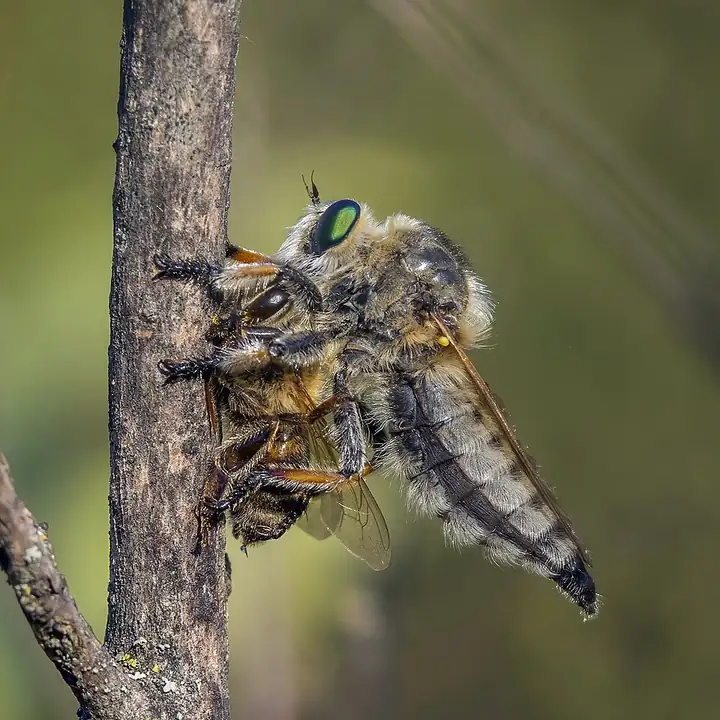
Robber flies
Family Asilidae; more than 1,000 species in North America, such as Efferia, Promachus, Diogmites and Proctacanthus
| Type | Insect |
|---|---|
| What it does | Predator |
| When | Summer; adults can live about three months |
| How common it is by region | Common here: Northeast, Southeast, South Central, Midwest, Great Plains, Mountain West, Southwest, Pacific Northwest, California |
About
Robber flies are long, bristly hunting flies that grab other insects out of the air. They eat a lot of grasshoppers and other pests, though they are not picky and take some helpful insects too.
This one is already on your side. Broad sprays kill it along with the pest, which is why the guide puts sprays last.
What it eats
Adults catch flying insects such as grasshoppers, beetles, flies, wasps, moths and sometimes bees. The larvae live in soil or rotting wood and eat insect eggs and soft larvae such as white grubs and wireworms.
Pests it goes after
Spotting it
How to find it early
Look in open, sunny spots for a gray, brown or black fly with a long tapering abdomen, perched in the open and darting out to catch prey. A few species are fuzzy and look like bumble bees.
Its young
Larvae stay hidden in soil or decaying wood, so gardeners seldom see them.
When
Summer; adults can live about three months
Easy to mistake for
- Bumble bees — Bumble-bee-like robber flies have one pair of wings, a fly's big eyes and a bristly face, and they perch and pounce; bumble bees have two pairs of wings and work flower to flower.
Bringing more of them in
Adults need nectar as well as prey, and Wisconsin Extension suggests nectar-rich flowers such as goldenrod. Leave some undisturbed soil and skip broad-spectrum sprays.
Plants that bring it in
Worth knowing
Some larger species can give a painful bite if you grab them, so let them be. They also eat honey bees and other pollinators now and then.
How common it is by region
| Northeast | Common here |
|---|---|
| Southeast | Common here |
| South Central | Common here |
| Midwest | Common here |
| Great Plains | Common here |
| Mountain West | Common here |
| Southwest | Common here |
| Pacific Northwest | Common here |
| California | Common here |
| Alaska | Occasional here |
| Hawaii | Occasional here |
Sources
Photo: Photo: Charles J. Sharp / Wikimedia Commons, CC BY-SA 4.0 (CC BY-SA 4.0). Photo resized for the web.

Planting dates and advice are general guidance; check with your local Cooperative Extension office for your area.