
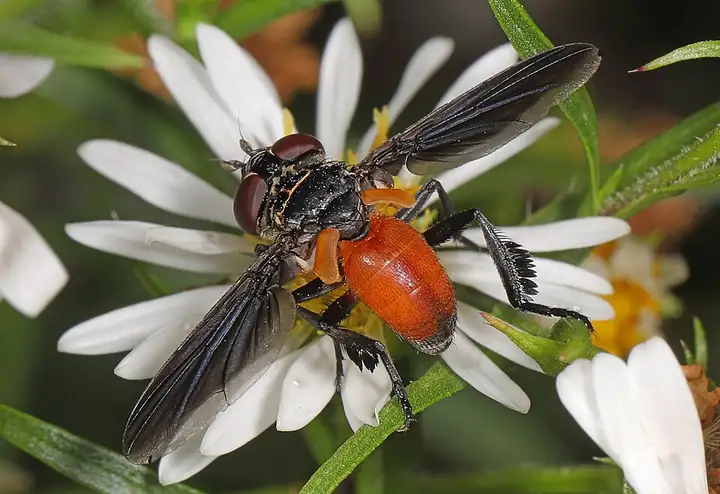
Tachinid flies
Family Tachinidae; garden examples include the feather-legged fly (Trichopoda pennipes) on squash bugs and stink bugs, and Istocheta aldrichi on Japanese beetles
| Type | Insect |
|---|---|
| What it does | Parasitoid |
| When | Late spring through fall |
| How common it is by region | Very common here: Northeast, Southeast, South Central, Midwest |
About
Tachinid flies look like bristly house flies, but their young grow inside caterpillars, beetles and true bugs and kill them. Gardeners rarely notice them, yet they quietly cut down many pests.
This one is already on your side. Broad sprays kill it along with the pest, which is why the guide puts sprays last.
What it eats
Larvae feed inside a host insect, first on parts it can live without, then on the rest, which kills it. Adults drink nectar and the sweet honeydew left by aphids and scale insects.
Pests it goes after
Cabbage looper, Colorado potato beetle, European corn borer, Japanese beetle, Leaffooted bugs, Squash bug, Stink bugs
Spotting it
How to find it early
Look for gray, black or striped flies with stiff bristles on the abdomen resting on leaves and flowers. The feather-legged fly is bright orange with a black head and thorax and a fringe of black hairs on its hind legs.
Its young
Some species glue small, oval white eggs onto a host's back or belly, so you may see white dots stuck on a squash bug, stink bug, Japanese beetle or caterpillar. Leave those insects alone; the fly maggot inside will finish them off.
When
Late spring through fall
Bringing more of them in
Adults need nectar, so keep flowers blooming from spring into fall, including late asters and goldenrods. Avoid broad-spectrum insecticides, and do not kill pests that carry white fly eggs.
Plants that bring it in
Worth knowing
Some species also attack the caterpillars of butterflies that gardeners want to raise.
How common it is by region
| Northeast | Very common here |
|---|---|
| Southeast | Very common here |
| South Central | Very common here |
| Midwest | Very common here |
| Great Plains | Common here |
| Mountain West | Common here |
| Southwest | Common here |
| Pacific Northwest | Common here |
| California | Common here |
| Alaska | Occasional here |
| Hawaii | Occasional here |
Sources
Photo: Photo: Judy Gallagher / Wikimedia Commons, CC BY 2.0 (CC BY 2.0). Photo resized for the web.

Planting dates and advice are general guidance; check with your local Cooperative Extension office for your area.