
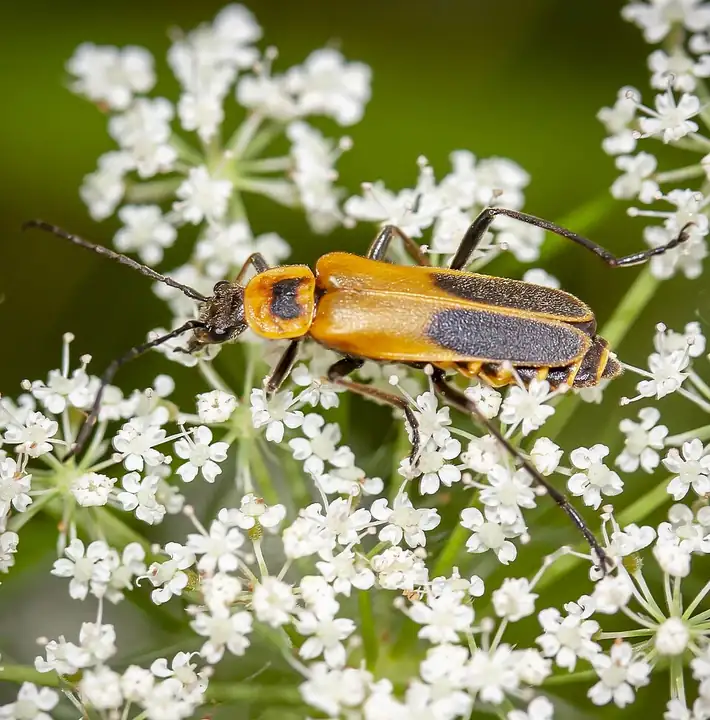
Soldier beetles (leatherwings)
Family Cantharidae; common garden species include the goldenrod soldier beetle or Pennsylvania leatherwing (Chauliognathus pensylvanicus) and the margined leatherwing (C. marginatus), plus Cantharis and Podabrus species
| Type | Insect |
|---|---|
| What it does | Predator |
| How common it is by region | Very common here: Northeast, Southeast, South Central, Midwest, Great Plains |
About
Soldier beetles are long, soft-winged beetles, often orange or yellow with black, that crowd onto late-summer flowers like goldenrod. The adults sip nectar and pollen and some eat aphids, while the larvae hunt insect eggs and grubs in the soil.
This one is already on your side. Broad sprays kill it along with the pest, which is why the guide puts sprays last.
What it eats
Some adults, such as Cantharis, eat aphids and other small soft-bodied insects, and goldenrod soldier beetles may eat a few aphids, eggs or small caterpillars besides pollen and nectar. The larvae prey on insect eggs, including grasshopper eggs, and other soft-bodied soil insects.
Pests it goes after
Spotting it
How to find it early
Look for narrow beetles about half an inch long with soft, leathery wing covers, often orange with a dark spot or band, clustered on goldenrod, milkweed, Queen Anne's lace and other flowers. They don't bite, sting or damage plants.
Its young
The larvae are dark, slender and worm-like, with dense tiny bristles that make them look velvety; they live in soil and leaf litter, overwinter there, and pupate in spring.
When
Margined leatherwing in late spring and early summer; goldenrod soldier beetle from July to September, peaking in August.
Easy to mistake for
- Blister beetles — Blister beetles have a narrow 'neck' behind the head, while a soldier beetle's thorax is wider than its head; don't handle blister beetles, which can blister skin.
- Fireflies (lightning bugs) — Fireflies have a pale light organ on the underside near the tail end; soldier beetles have none and fly by day.
Bringing more of them in
Grow late-summer flowers they love and leave some undisturbed soil and leaf litter where the larvae can live through winter.
Plants that bring it in
How common it is by region
| Northeast | Very common here |
|---|---|
| Southeast | Very common here |
| South Central | Very common here |
| Midwest | Very common here |
| Great Plains | Very common here |
| Mountain West | Common here |
| Southwest | Common here |
| Pacific Northwest | Common here |
| California | Common here |
| Alaska | Occasional here |
| Hawaii | Occasional here |
Sources
Photo: Photo: WanderingMogwai / Wikimedia Commons, CC BY-SA 4.0 (CC BY-SA 4.0). Photo resized for the web.

Planting dates and advice are general guidance; check with your local Cooperative Extension office for your area.