
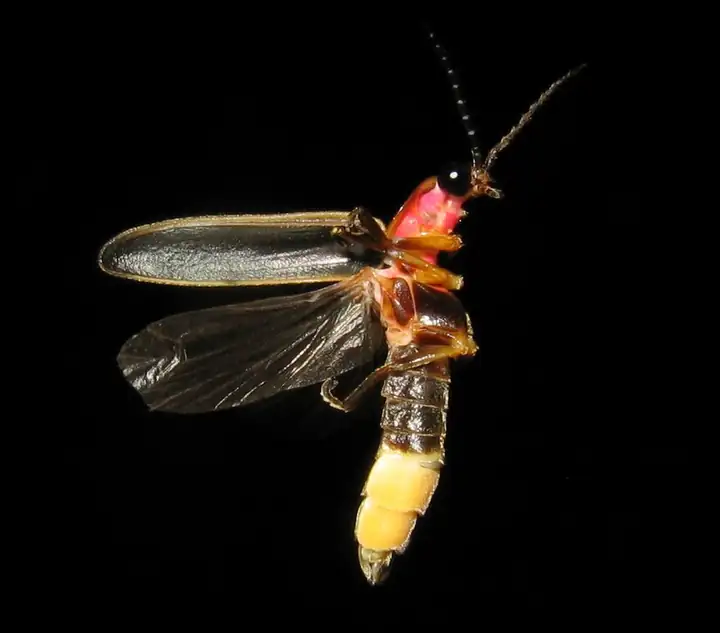
Fireflies (lightning bugs)
Family Lampyridae; about 200 North American species, such as the big dipper firefly (Photinus pyralis) common across the Midwest and East
| Type | Insect |
|---|---|
| What it does | Predator |
| How common it is by region | Very common here: Northeast, Southeast, South Central, Midwest |
About
Fireflies are soft-winged beetles, not flies, and the flashing adults of early summer evenings are only the last stage of their lives. Their larvae spend a year or more in damp soil and leaf litter hunting slugs, snails and other small creatures.
This one is already on your side. Broad sprays kill it along with the pest, which is why the guide puts sprays last.
What it eats
The larvae eat slugs, snails, earthworms, cutworms and other soil insects, paralyzing prey with their jaws. Adults live only a few weeks and mostly just look for mates.
Pests it goes after
Spotting it
How to find it early
Watch for blinking yellow-green lights over lawns and fields from dusk into the night; by day the adults rest on leaves and grass. They are uncommon west of the Great Plains.
Its young
The larvae (glowworms) live on or in damp soil and under leaves and hunt at night; some give off a faint glow. Eggs are laid in damp soil and litter.
When
Adults in early to mid summer (early June in Illinois); larvae all year in the soil.
Easy to mistake for
- Soldier beetles (leatherwings) — Soldier beetles look much like fireflies but have no light organ on the underside and are busy on flowers by day.
Bringing more of them in
Leave fallen leaves and an unmown or rarely mown patch, avoid slug and snail baits and other pesticides, and turn off or dim outdoor lights during firefly season (point them down, use timers or red bulbs).
How common it is by region
| Northeast | Very common here |
|---|---|
| Southeast | Very common here |
| South Central | Very common here |
| Midwest | Very common here |
| Great Plains | Common here |
| Mountain West | Occasional here |
| Southwest | Occasional here |
| Pacific Northwest | Occasional here |
| California | Occasional here |
| Alaska | Not found here |
| Hawaii | Not found here |
Sources
Photo: Photo: art farmer / Wikimedia Commons, CC BY-SA 2.0 (CC BY-SA 2.0). Photo resized for the web.

Planting dates and advice are general guidance; check with your local Cooperative Extension office for your area.