
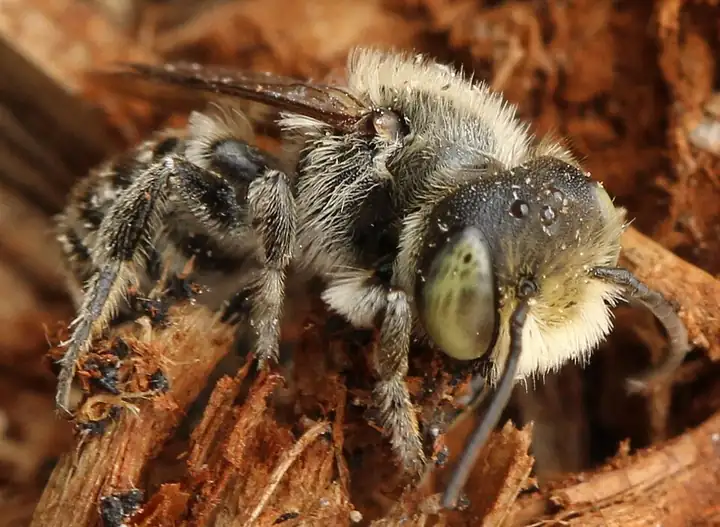
Leafcutter bees
Megachile species, such as the alfalfa leafcutting bee (Megachile rotundata)
| Type | Insect |
|---|---|
| What it does | Pollinator |
| When | Spring through summer |
| How common it is by region | Common here: Northeast, Southeast, South Central, Midwest, Great Plains, Mountain West, Southwest, Pacific Northwest, California |
About
Leafcutter bees are stout, dark bees that cut neat round pieces from leaves to line their nests. They are good pollinators, and the leaf cutting is cosmetic.
This one is already on your side. Broad sprays kill it along with the pest, which is why the guide puts sprays last.
What it eats
Females gather pollen and nectar from many flowers and pollinate crops such as blueberries, onions, carrots and alfalfa. They do not eat the leaves they cut.
Spotting it
How to find it early
Look for a honey-bee-sized black bee with pale bands whose belly is yellow or gold with pollen, since females carry pollen under the abdomen, not on the legs. Smooth half-moon notches on the edges of rose and redbud leaves are their sign.
Its young
Larvae grow inside cigar-shaped rolls of leaf pieces packed into hollow stems, wood holes or other cavities.
When
Spring through summer
Easy to mistake for
- Honey bee — Leafcutter bees carry pollen on a yellow-gold brush under the belly and are stouter and darker; honey bees carry pollen balls on their hind legs.
Bringing more of them in
Leave hollow plant stems and old wood standing, or offer drilled blocks and tubes for nesting. Tolerate some notched leaves and avoid sprays, which do not stop leaf cutting anyway.
Plants that bring it in
Worth knowing
Females can sting, but only when handled, and the sting is much milder than a honey bee's. The leaf notches look bad but rarely harm a healthy plant.
How common it is by region
| Northeast | Common here |
|---|---|
| Southeast | Common here |
| South Central | Common here |
| Midwest | Common here |
| Great Plains | Common here |
| Mountain West | Common here |
| Southwest | Common here |
| Pacific Northwest | Common here |
| California | Common here |
| Alaska | Occasional here |
| Hawaii | Occasional here |
Sources
Photo: Photo: Dirk Pons / Wikimedia Commons, CC BY 2.0 (CC BY 2.0). Photo resized for the web.

Planting dates and advice are general guidance; check with your local Cooperative Extension office for your area.