
Ichneumon wasps
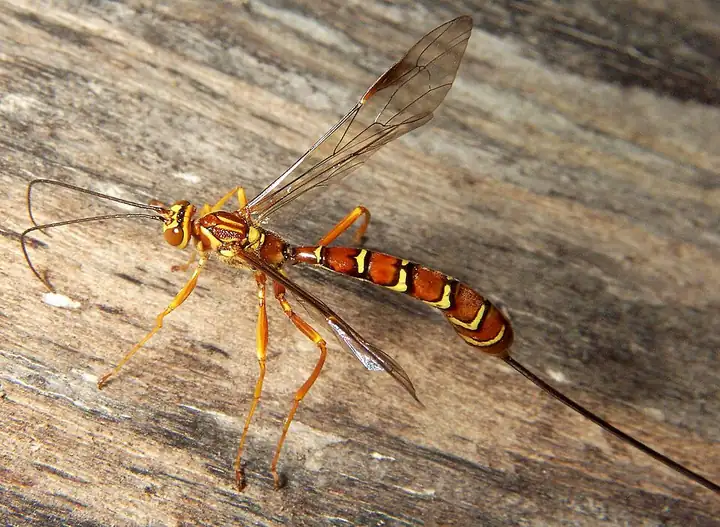
Family Ichneumonidae, from small caterpillar parasites to the giant ichneumons (Megarhyssa) and the orange Ophion wasps that come to porch lights
| Type | Insect |
|---|---|
| What it does | Parasitoid |
| When | Spring through fall; giant ichneumons mostly May through July |
| How common it is by region | Common here: Northeast, Southeast, South Central, Midwest, Great Plains, Mountain West, Southwest, Pacific Northwest, California, Alaska |
About
Ichneumons are slender wasps with long antennae whose young develop on or inside other insects, mostly caterpillars and beetle larvae. Some, like the giant ichneumon, trail an egg-laying tube longer than their body, which looks alarming but is not a stinger.
This one is already on your side. Broad sprays kill it along with the pest, which is why the guide puts sprays last.
What it eats
Larvae feed on caterpillars, moth pupae, beetle grubs, sawflies and other insects; Ophion species attack white grubs. Adults often drink fluids from their hosts.
Pests it goes after
Spotting it
How to find it early
Look for a thin, long-legged wasp with long antennae, often reddish-brown, yellow or black. Giant ichneumons, about 1.5 inches long plus a 2- to 3-inch 'tail', gather on dying hardwood trees in late spring and early summer.
Its young
Larvae develop hidden inside or on their hosts, so you rarely see them.
When
Spring through fall; giant ichneumons mostly May through July
Easy to mistake for
- Dragonflies and damselflies — A giant ichneumon has a wasp's narrow waist, long antennae and three long threads trailing from its tail; dragonflies have short antennae, big eyes and no tail threads.
Bringing more of them in
Keep a mix of flowering plants and avoid broad-spectrum insecticides. Let them be; they move on by themselves.
Worth knowing
Ichneumons are not aggressive, but some can sting or jab if handled, and the orange Ophion wasps that fly to lights at night can sting. Giant ichneumons do not harm trees and need no control.
How common it is by region
| Northeast | Common here |
|---|---|
| Southeast | Common here |
| South Central | Common here |
| Midwest | Common here |
| Great Plains | Common here |
| Mountain West | Common here |
| Southwest | Common here |
| Pacific Northwest | Common here |
| California | Common here |
| Alaska | Common here |
| Hawaii | Occasional here |
Sources
Photo: Photo: Bruce Marlin / Wikimedia Commons, CC BY-SA 2.5 (CC BY-SA 2.5). Photo resized for the web.

Planting dates and advice are general guidance; check with your local Cooperative Extension office for your area.