
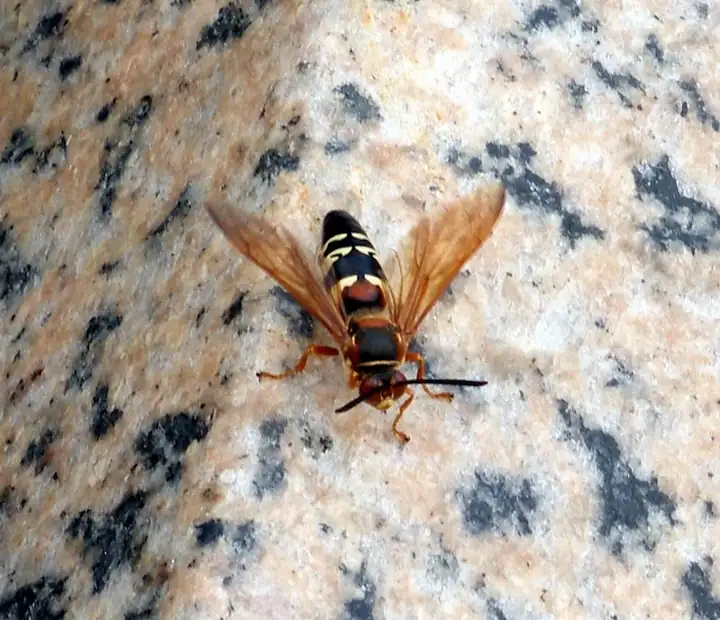
Cicada killer wasps
Eastern cicada killer (Sphecius speciosus); the western (S. grandis) and Pacific (S. convallis) cicada killers live in the West
| Type | Insect |
|---|---|
| What it does | Predator |
| When | July through August, while cicadas are singing |
| How common it is by region | Very common here: Northeast, Southeast, South Central, Midwest |
About
Cicada killers are huge wasps, up to about 1.5 inches long, that dig burrows in sunny lawns and sandy spots in midsummer. They look frightening, but they are mild-mannered and hunt only cicadas.
This one is already on your side. Broad sprays kill it along with the pest, which is why the guide puts sprays last.
What it eats
Females sting and paralyze cicadas, drag them into their burrows and lay an egg on each one for the larva to eat. Adults sip flower nectar.
Spotting it
How to find it early
Look for a very large wasp with a dark rust-red head and thorax, a black abdomen with pale yellow bands, and amber wings. Burrows are half-inch holes with a U-shaped spill of soil, often near sidewalks, patios and sandy play areas.
Its young
Larvae stay deep in underground cells with their cicadas and spend the winter there.
When
July through August, while cicadas are singing
Easy to mistake for
- Yellowjackets (and baldfaced hornets) — Cicada killers are about twice the size of a yellowjacket, with a rusty-red front half and amber wings, and they nest alone in single burrows rather than busy colonies.
Bringing more of them in
They need no help. If burrows bother you, tolerate them for the few weeks they are active, since they do not reuse nests and leave by late summer.
Worth knowing
Males buzz and dive at people to guard their patch, but they have no stinger. Females can sting and the sting is painful, but they rarely do unless handled roughly. People with a sting allergy should keep their distance and let a professional handle nests in busy areas.
How common it is by region
| Northeast | Very common here |
|---|---|
| Southeast | Very common here |
| South Central | Very common here |
| Midwest | Very common here |
| Great Plains | Common here |
| Mountain West | Occasional here |
| Southwest | Common here |
| Pacific Northwest | Occasional here |
| California | Occasional here |
| Alaska | Not found here |
| Hawaii | Not found here |
Sources
Photo: Photo: Anders Sandberg / Wikimedia Commons, CC BY 2.0 (CC BY 2.0). Photo resized for the web.

Planting dates and advice are general guidance; check with your local Cooperative Extension office for your area.