
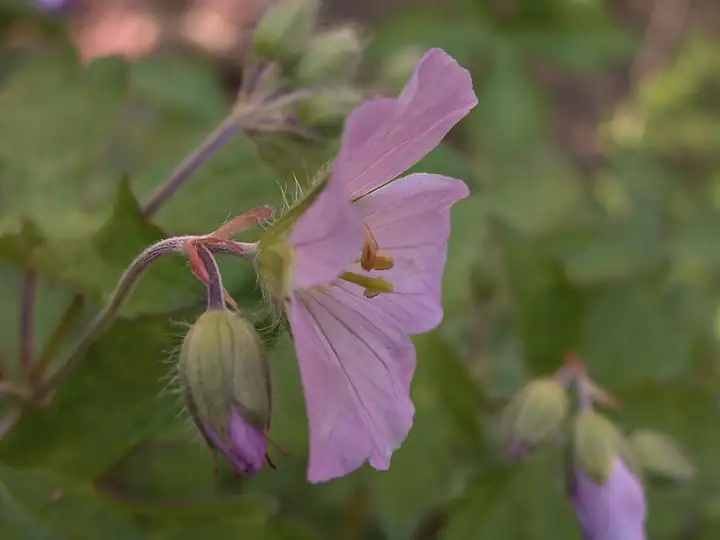
Wild geranium (spotted cranesbill)
Geranium maculatum · Geranium family (Geraniaceae)
When to plant: Sow seed outdoors in fall, since it needs a cold period to sprout, or divide the rhizomes in early spring or fall.
| Hardiness zones | 3 to 8 |
|---|---|
| Sun | full sun to part shade |
| Water | moderate |
| Life cycle | perennial |
| Frost | Hardy: takes frost |
About Wild geranium (spotted cranesbill)
Wild geranium is a native woodland perennial that forms leafy mounds 1-2 feet tall with rose-pink to lavender flowers in late spring. Bees, including a specialist mining bee, visit the flowers, and songbirds eat the seeds. Ripe seed capsules spring open and fling seeds 10 to 30 feet.
Wisconsin Extension lists zones 3-8 (NC State gives a wider range).
When to plant
Sow seed outdoors in fall, since it needs a cold period to sprout, or divide the rhizomes in early spring or fall.
Garden plants often bloom the first year; wild plants may take two or three years (Wisconsin Extension).
Soil
Moist, fertile soil with plenty of organic matter; leaves may yellow or the plant may go dormant early if the soil dries out.
Plant in fertile soil with plenty of organic matter and keep it moist; wild geranium may go dormant early if the soil dries out.
Feeding
Look for: a balanced or all-purpose fertilizer at the label rate. Skip high-phosphorus "bloom boosters" unless a soil test shows low phosphorus: most garden soils already have enough, and the extra can wash into streams.
Harvest
Grown for its spring flowers, which last about a month in late spring to early summer, longer in cool weather.
Pests to watch for
Diseases and problems
Rust, Leaf spot
In the kitchen
NC State notes the leaves can be brewed into a tea.
Safety: NC State notes no toxicity concerns; the sources used give no information on pregnancy or drug interactions.
Pets: Not listed by the ASPCA; its 'Geranium' entry covers garden geraniums (Pelargonium species), a different plant, which it lists as toxic to dogs, cats and horses.
Sources
Photo: Photo: Cbaile19 / Wikimedia Commons, CC0 (CC0). Photo resized for the web.

Planting dates and advice are general guidance; check with your local Cooperative Extension office for your area.