
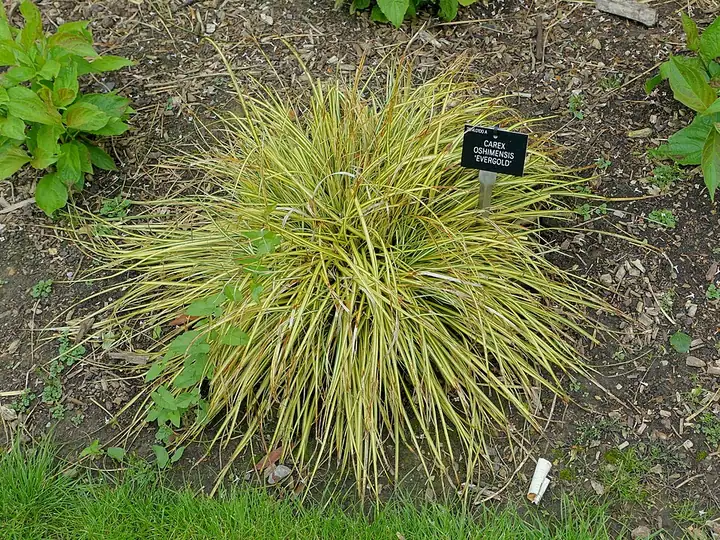
Sedges (Carex)
Carex spp. (e.g. C. morrowii, C. oshimensis, C. pensylvanica, C. plantaginea, C. buchananii) · Sedge family (Cyperaceae)
When to plant: Plant in spring or fall.
| Hardiness zones | 5 to 9 |
|---|---|
| Sun | part shade |
| Water | moderate |
| Life cycle | perennial |
| Frost | Hardy: takes frost |
About Sedges (Carex)
Sedges are grass-like plants with triangular stems, and there are about 2,100 species. Some need full sun and others thrive in shade; many make neat evergreen tufts or spreading mats, and some grow in moist or even wet spots (NC State, Clemson). Their seeds feed birds and their leaves feed caterpillars.
Japanese sedge cultivars are rated zones 5-9 (Clemson); other species vary, so check the label.
When to plant
Plant in spring or fall.
Sedges recover slowly from being cut back, so instead of shearing evergreen kinds, comb out old leaves with gloved hands in spring (Clemson, NC State).
Soil
Moist soil; many grow in wet spots. Sedges show stress quickly if overwatered or overfertilized (NC State, Clemson).
Plant in moist soil; little prep needed (NC State).
Feeding
Sedges quickly show stress when overwatered or overfertilized (NC State). Keep new plants moist the first few weeks, then water about 1 inch a week in dry spells (Clemson).
Varieties (7)
Extension pages describe few named sedge cultivars; species are listed where that is how they're sold.
| Variety | Type | Zones | Notes |
|---|---|---|---|
| Leatherleaf sedge | C. buchananii | 5–9typical for sedges | Reddish, hair-like leaves. Sources: [1] |
| Broadleaf sedge | C. platyphylla | 5–9typical for sedges | Broad blue-gray leaves. Sources: [1] |
| Belinda's Find | C. punicea | 5–9typical for sedges | Red and orange striped leaves. Sources: [1] |
| Silver Sceptre | Hybrid | 5–9typical for sedges | Dense, foot-high clumps of narrow variegated leaves. Sources: [1] |
| Goldband | Japanese sedge (C. morrowii) | 5–9 | Evergreen; white and green striped; sun to shade with even moisture. Sources: [2] |
| Ice Dance | Japanese sedge (C. morrowii) | 5–9 | Dark green leaves with white edges; 6-12 in; spreads; part sun to shade. Sources: [2] |
| Variegata | Japanese sedge (C. morrowii) | 5–9 | Green and yellow stripes; 1-1.5 ft; part to full shade. Sources: [2] |
Pests to watch for
Diseases and problems
In the kitchen
Pets: Not listed as toxic by the ASPCA.
Sources
Photo: Photo: Daderot / Wikimedia Commons, CC0 (CC0). Photo resized for the web.

Planting dates and advice are general guidance; check with your local Cooperative Extension office for your area.