
Finger lime
Citrus australasica (formerly Microcitrus australasica) · Citrus family (Rutaceae)
When to plant: Set out plants up to 2 weeks after the last frost.
| Hardiness zones | 9 to 11 |
|---|---|
| Sun | full sun |
| Water | moderate |
| Life cycle | perennial |
| Frost | Tender: killed by frost |
About Finger lime
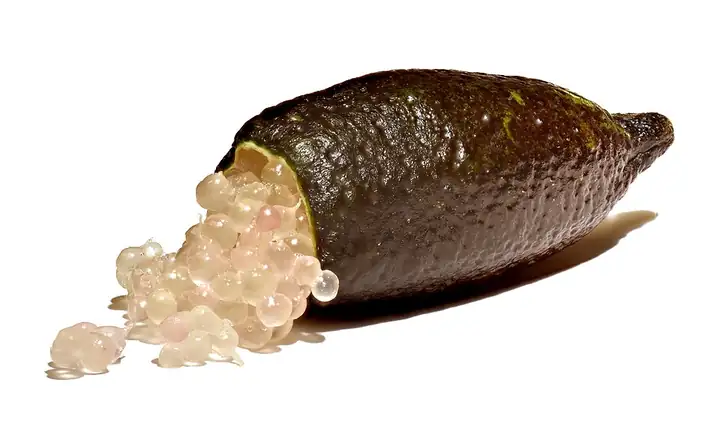
Finger lime is a very thorny shrub or small tree from the subtropical rainforests of northern New South Wales and southeast Queensland in Australia. Its finger-shaped fruit, about 3 inches long, is packed with tiny round juice beads that pop like caviar, in green, pink or red depending on the variety. It shrugs off citrus greening better than most citrus, and some varieties stay small enough for a big pot.
No extension source we found gives a hardiness zone range. In Florida, finger limes came through a 2022 freeze with wind chills of about 21-32 F and recovered within a week, but UF says trees under 2 years old need freeze protection and that 'UF SunLime' handles cold better than 'UF RedLime'. The 9-11 range shown here is our estimate, matching other limes; treat it as a guide, not a rating.
When to plant
Timing is counted from your average last spring frost (and first fall frost). Sow & Tell works out the actual dates for your ZIP code.
- Set out plants: up to 2 weeks after the last frost
A potted tree goes outside after the last spring frost and is eased into full sun over about two weeks (Maryland Extension; Wisconsin says wait until temperatures stay above 50 F). UF found finger limes start to flower and fruit within a year of planting, with steady crops after the third year.
Soil
In a pot, a fast-draining, slightly acid citrus or palm-and-cactus mix; we found no finger-lime-specific soil guidance, so follow general container citrus advice (Mississippi State; UC Master Gardeners).
Pot it in a fast-draining, slightly acid potting mix (bark-based, or palm-and-cactus mix) in a container with drainage holes, never garden soil; in the ground, test the soil and keep the pH around 6.0-7.0 (Mississippi State; UC Master Gardeners; UGA).
Feeding
- First feeding after planting, once new growth starts (about 4 to 6 weeks): citrus fertilizer with micronutrients (about a 2-1-1 or 3-1-1 N-P-K ratio with iron, manganese and zinc, or a slow-release 12-6-6 or 12-4-6). Follow the label for a pot; in the ground, UGA starts a young tree with about 1/3 lb of 8-8-8 with micronutrients spread in a 30-inch circle and watered in. UF says finger limes get by on much less fertilizer than regular citrus, so stay at the low end of the label.
Look for: mostly nitrogen, in spring as growth starts. Spring feeding grows the new shoots and leaves that carry flowers and fruit; feeding after midsummer pushes soft growth that may not harden before winter. - Early spring each year, as new growth begins: citrus fertilizer with micronutrients (N-P-K about 2-1-1 or 3-1-1). Slow-release granules need 2 to 3 feedings a season; a water-soluble citrus food can instead go on about once a month from late winter to fall (Clemson; Maryland; UC Master Gardeners; Texas A&M).
Look for: mostly nitrogen, in spring as growth starts. Spring feeding grows the new shoots and leaves that carry flowers and fruit; feeding after midsummer pushes soft growth that may not harden before winter. - Early summer: citrus fertilizer with micronutrients. Repeat the spring feeding at the label rate and water it in (Maryland Extension).
Look for: mostly nitrogen, in spring as growth starts. Spring feeding grows the new shoots and leaves that carry flowers and fruit; feeding after midsummer pushes soft growth that may not harden before winter. - Late summer (the last feeding of the year): citrus fertilizer with micronutrients. Give the final feeding, then stop by early fall so new growth can harden before winter; in the ground, UGA says no fertilizer from August 1 to February 15.
Look for: mostly nitrogen, in spring as growth starts. Spring feeding grows the new shoots and leaves that carry flowers and fruit; feeding after midsummer pushes soft growth that may not harden before winter. - Any time young leaves turn yellow with green veins: chelated iron fertilizer or a sulfur soil acidifier. Apply as the label directs; this pattern usually means iron is short or the mix is not acid enough (Maryland Extension).
Look for: mostly nitrogen, in spring as growth starts. Spring feeding grows the new shoots and leaves that carry flowers and fruit; feeding after midsummer pushes soft growth that may not harden before winter.
Don't feed through the winter indoors (Wisconsin and Minnesota feed only about April to September), and don't overwater or let the root ball dry out: too much water drops leaves and too little drops flowers (Maryland; Mississippi State). Finger limes need less fertilizer than standard citrus, so don't overfeed (UF/IFAS).
Harvest
At Riverside, California, finger limes ripen off and on all year with the most fruit in October to December; ripe fruit is roughly 2 to 4 inches long and its final skin color (green, yellow, red or purple-black) depends on the variety (UC Riverside). Wear thick gloves: UF calls the thorns wicked.
Finger limes bear year-round, with the main crop in November-December in California, when ripe fruit comes off in your hand.
Varieties (20)
| Variety | Type | Season and days | Zones | Notes |
|---|---|---|---|---|
| Australian finger lime (older UCR selection, VI 697) | Finger lime | Year round at Riverside, CA; peak November to December | 9–11typical for finger lime | Very tart juice, much like a Mexican lime. Skin usually greenish black to very dark purple; round juice beads are clear green, sometimes pale pink. Fruit about 3 in long. Tree size depends on rootstock, from about 5 ft to large; very dense and spiny, with purple new growth. It was California's only publicly available finger lime until 2021 and is still widely grown. The label 'sanguinea' was added for its faint pink color but is used inconsistently. Sources: [6][7] |
| Byron Sunrise | Finger lime (Australian selection) | 9–11typical for finger lime | Low in acid. Smooth skin, mottled green-brown to black when fully ripe, with small dark red beads. Low-vigor tree with a narrow, upright habit. Selected in Alstonville, New South Wales, in 2000; parent of several of the 2025 USDA releases. Sources: [6] | |
| Durham's Emerald | Finger lime (Australian selection) | Heavy crop from summer to late fall in Australia, with light crops all year | 9–11typical for finger lime | Firm black skin with emerald-green beads that come out easily; fruit about 1.6-3.1 in long. Found in the Northern Rivers district of New South Wales and introduced in 1994; grown commercially in California. Sources: [6] |
| Rainforest Pearl | Finger lime (Australian selection) | Early; December to April in New South Wales | 9–11typical for finger lime | Tart. Thin rind that ranges from yellow-green to red, with pink flesh; fruit about 2.9 in long. Bred by Byron Bay Native Produce in New South Wales and protected in Australia. Sources: [6] |
| UF RedLime | Finger lime (University of Florida, patented) | Main harvest December to February in Florida, some fruit all year | 9–11typical for finger lime | Dark red skin and red pulp; long fruit, about 4 in. Upright bush about 6 ft tall at six years, with small thorns; 8 to 25 seeds per fruit. A cross of two red finger limes. UF reports it grew well under citrus greening and tested free of the bacterium. Sources: [1][4][24] |
| Charli Blushfire | Finger lime (USDA/UC Riverside 2025 release) | Year round at Riverside, CA; peak October to December | 9–11typical for finger lime | Red skin that can show yellow to dark green patches, with pink to reddish-white beads; fruit about 2.4-3.2 in long. Medium to large tree; seedy. Seedling of 'Byron Sunrise'. Sources: [25] |
| Dexter Rosefire | Finger lime (USDA/UC Riverside 2025 release) | Year round at Riverside, CA; peak October to December | 9–11typical for finger lime | Medium to dark red skin with pink to red beads; straight fruit about 2-2.8 in long. Medium to large spreading tree; seedy. Seedling of 'Blunobia Pink Crystal'. Sources: [26] |
| Ellie Siren | Finger lime (USDA/UC Riverside 2025 release) | Year round at Riverside, CA; peak October to December | 9–11typical for finger lime | Light to medium red skin with pink to reddish-white beads; straight fruit about 2.4-2.8 in long. Medium to large upright tree with high fruit set; seedy. Seedling of 'Blunobia Pink Crystal'. Sources: [27] |
| Kermit | Finger lime (USDA/UC Riverside 2025 release) | Year round at Riverside, CA; peak October to December | 9–11typical for finger lime | Light to medium green skin with green beads; short fruit about 2-2.2 in long. Small to medium spreading tree with high fruit set; seedy. Seedling of 'Judy's Everbearing'; a green-fleshed choice among the mostly red new releases. Sources: [28] |
| Maroon Gem | Finger lime (USDA/UC Riverside 2025 release) | Year round at Riverside, CA; peak October to December | 9–11typical for finger lime | Medium to dark red skin with pink-red to red beads; slightly curved fruit about 2.7-3.2 in long. Small, spreading, dense tree with many spines; seedy. Grown from open-pollinated seed of 'Blunobia Pink Crystal' from New South Wales; one of 17 finger limes USDA released in 2025. Sources: [29][30] |
| Misterioso | Finger lime (USDA/UC Riverside 2025 release) | Year round at Riverside, CA; peak October to December | 9–11typical for finger lime | Medium to dark red skin with bright red to dark red beads; straight fruit about 1.9-3 in long. Large, upright-spreading tree; seedy. Seedling of 'Blunobia Pink Crystal'. Sources: [31] |
| Pink Sunset | Finger lime (USDA/UC Riverside 2025 release) | Year round at Riverside, CA; peak October to December | 9–11typical for finger lime | Medium to dark red skin with pink to reddish-white beads; straight fruit about 1.9-2.9 in long. Medium to large upright tree; seedy. Seedling of 'Blunobia Pink Crystal'. Sources: [32] |
| Porfirio | Finger lime (USDA/UC Riverside 2025 release) | Year round at Riverside, CA; peak October to December | 9–11typical for finger lime | Medium to dark red skin with pink to red beads; long fruit, about 3.2-4 in. Small, spreading tree; seedy. Seedling of 'Blunobia Pink Crystal'. Sources: [33] |
| Rubirosa | Finger lime (USDA/UC Riverside 2025 release) | Year round at Riverside, CA; peak October to December | 9–11typical for finger lime | Medium to dark red skin with pink to pink-red beads; straight fruit about 2.4-3.7 in long. Medium to large spreading tree with high fruit set; seedy. Seedling of 'Byron Sunrise'; budwood is available in California through the Citrus Clonal Protection Program. Sources: [34] |
| Ruby, My Dear | Finger lime (USDA/UC Riverside 2025 release) | Year round at Riverside, CA; peak October to December | 9–11typical for finger lime | Medium to dark red skin with pink-red to very bright red beads; one of the larger fruits, about 3-3.9 in long. Small, spreading tree; seedy. Seedling of 'Byron Sunrise'. Sources: [35] |
| Sunshine Daydream | Finger lime (USDA/UC Riverside 2025 release) | Year round at Riverside, CA; peak October to December | 9–11typical for finger lime | Yellow skin with white beads; slender fruit about 2.8-4 in long. Medium-size tree; seedy. Seedling of 'Blunobia Pink Crystal'. Sources: [36] |
| Toots | Finger lime (USDA/UC Riverside 2025 release) | Year round at Riverside, CA; peak October to December | 9–11typical for finger lime | Light to dark red skin with pink to very bright pink beads; fruit about 2.2-3.7 in long and on the heavy side for a finger lime. Large tree; seedy. Seedling of 'Byron Sunrise'. Sources: [37] |
| UF SunLime | Finger lime hybrid (University of Florida, patented) | Main harvest November to February in Florida, some fruit all year | 9–11typical for finger lime | Deep red skin and red pulp; fruit about 2.8 in long with 0 to 10 seeds. Medium bush about 8 ft tall at seven years. A cross of Citrus inodora and a red finger lime. UF found it handles cold better than 'UF RedLime' and grows well under citrus greening. Sources: [1][4][38] |
| Minnie | Finger lime hybrid (USDA-ARS, 2018) | 9–11typical for finger lime | Crunchy, juicy pale beads used like regular finger lime for garnish and flavor. Pale yellow to pale green beads; fruit a little over 2 in long, turning from dark green to yellow when mature; nearly seedless. Very compact, attractive tree with reddish-purple new growth. A cross of finger lime and another Australian lime (Citrus inodora) from USDA-ARS in Florida; bred to grow well in pots and backyards. Sources: [6][9] | |
| Red Caviar | Finger lime x mandarin hybrid | 9–11typical for finger lime | A red-fruited hybrid of finger lime and mandarin bred in France. Trustworthy public sources describe little about the fruit or tree. UC Riverside's David Karp (2022 UF symposium) lists it as a finger lime x mandarin hybrid filed for European plant-variety protection in 2021, first under the name 'Citron Caviar Red Lemon'; he notes the actual breeder is uncertain. We found no extension or USDA description of its fruit, so the other fields are blank. Sources: [6] |
Pests to watch for
Scale insects, Mealybugs, Twospotted spider mite, Aphids, Whiteflies, Citrus leafminer, Asian citrus psyllid
Diseases and problems
In the kitchen
The little juice beads are used as a tart, crunchy garnish for seafood, drinks and fancy dishes; the flavor is limey, and some describe hints of lemon and grapefruit (UF/IFAS; USDA-ARS).
Keeping it: In UF/IFAS trials, finger limes held up about three weeks at 50 F, better than at ordinary fridge temperature.
Safety: The sources we checked list no toxic parts, and we found no research-based guidance on use in pregnancy, drug interactions or allergies. The long, sharp thorns can injure hands and eyes.
Pets: Not listed by the ASPCA; the ASPCA does list orange, lemon, lime and calamondin as toxic to dogs, cats and horses because of essential oils and psoralens in the plant.
Sources
- hos.ifas.ufl.edu
- blogs.ifas.ufl.edu
- blogs.ifas.ufl.edu
- australianlimes.ifas.ufl.edu
- crec.ifas.ufl.edu
- australianlimes.ifas.ufl.edu
- citrusvariety.ucr.edu
- citrusvariety.ucr.edu
- scientificdiscoveries.ars.usda.gov
- hort.extension.wisc.edu
- extension.umd.edu
- extension.msstate.edu
- ucanr.edu
- aspca.org
- aspca.org
- aphis.usda.gov
- usda.gov
- fieldreport.caes.uga.edu
- sandiegocounty.gov
- aggie-horticulture.tamu.edu
- hgic.clemson.edu
- agrilifetoday.tamu.edu
- extension.umn.edu
- patents.google.com
- citrusvariety.ucr.edu
- citrusvariety.ucr.edu
- citrusvariety.ucr.edu
- citrusvariety.ucr.edu
- citrusvariety.ucr.edu
- citrusvariety.ucr.edu
- citrusvariety.ucr.edu
- citrusvariety.ucr.edu
- citrusvariety.ucr.edu
- citrusvariety.ucr.edu
- citrusvariety.ucr.edu
- citrusvariety.ucr.edu
- citrusvariety.ucr.edu
- patents.google.com
Photo: Photo: Amada44, CC BY-SA 3.0, via Wikimedia Commons (CC BY-SA 3.0). Photo resized for the web.

Planting dates and advice are general guidance; check with your local Cooperative Extension office for your area.