
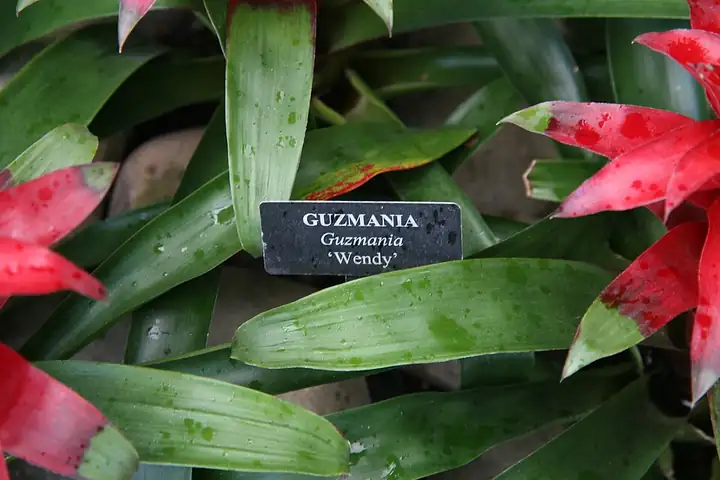
Bromeliads
Guzmania, Vriesea and Aechmea species and hybrids (also Neoregelia) · Bromeliad family (Bromeliaceae)
When to plant: Any time of year, since it grows indoors. It rarely needs repotting; pot up the pups once they are about a third the size of the parent.
| Hardiness zones | 10 to 12 |
|---|---|
| Sun | part shade |
| Water | moderate |
| Life cycle | perennial |
| Frost | Tender: killed by frost |
Will it grow in your window?
Pick the window it sits in. This is the same check Sow & Tell runs for every plant in your house.
It wants bright, indirect light.
Pick a window above and this will tell you whether the spot suits it.
Watering: let it dry out between waterings — about every 10 days, stretching to every 18 from November to February.
Summering outside? Bring it in before nights drop below 60°F.
About Bromeliads
The bromeliads sold as houseplants are mostly tree-perching relatives of the pineapple from Florida, the Caribbean and tropical America, with a rosette of leathery, often banded leaves that forms a central cup or 'tank' that holds water (Clemson, NC State). Guzmanias and vrieseas carry a flaming red, orange or yellow bract spike for months, and aechmea, the silver vase plant, holds a pink spike for weeks. Each rosette blooms once and then slowly dies, leaving pups around its base that bloom in a few years.
Hardy outdoors only in zones 10-12 (NC State for guzmania and aechmea); they are grown indoors everywhere and can summer outdoors in shade once nights stay above about 60 F, coming in when temperatures cool (Clemson, NC State).
When to plant
Any time of year, since it grows indoors. It rarely needs repotting; pot up the pups once they are about a third the size of the parent.
Usually bought as a blooming nursery plant; new plants come from the pups (offsets) that form around the base after flowering (Clemson, NC State).
Growing it indoors
- Light: Bright, filtered light: aechmea and neoregelia take the brightest spots and color up best there, guzmania and vriesea want moderate light, and hot direct sun bleaches and burns the leaves (Clemson, NC State).
- Water: Keep about 1 in of water in the central cup, dump and refill it monthly so it doesn't go stale or build up salts, and water the mix itself only when it has dried out, less in winter (NC State, Clemson). Soft or distilled water is kinder to the cup, and soggy mix is the main way they rot.
- Humidity: Guzmania and vriesea want constantly moist air with good air movement, so mist, group plants or use a pebble tray in dry rooms (Clemson).
- Temperature: Clemson gives 60-85 F for good growth; guzmania and vriesea want steady warmth, and cold or dry air shows as brown leaf tips (NC State).
- Feeding: Lightly: a liquid fertilizer at half strength or less in summer, misted on the leaves or poured into the cup during active growth, and none in winter (Clemson, NC State).
- Repotting: Rarely; pot the pups in a small 4-6 in pot of porous mix when they are about a third the size of the parent (guzmania) or about 6 in tall (aechmea), and leave the old plant to feed them until then (NC State).
- More plants: Pups (offsets) form around the base after flowering; cut them off with a sharp knife once they are about a third the size of the parent, pot them in porous mix, and keep them barely moist until rooted (Clemson, NC State).
If something looks wrong
| What you see | Likely cause | What to do |
|---|---|---|
| Brown, dry leaf tips | Dry air, an empty cup or a cold draft | Keep water in the cup, raise the humidity with a pebble tray or misting, and move it away from vents and cold windows (NC State, Clemson). |
| Base of the rosette soft and brown, leaves pulling loose | Crown or root rot from soggy mix | Let the mix dry out, move it to a smaller pot of bark mix, and save any firm pups (NC State, Clemson). |
| A mature plant that won't bloom | Too young, too little light, or just slow | Give it bright filtered light; Clemson's old trick is to seal the plant in a clear plastic bag with a ripe apple for 2-3 days, and flowers follow in 6-14 weeks. |
| Brown bumps or cottony tufts on the leaves | Scale or mealybugs, the most common pests | Wipe them off with a cotton swab dipped in rubbing alcohol and repeat weekly (Clemson, NC State). |
Soil
A porous bark-based orchid mix, or houseplant mix with bark and perlite added, in a small pot; the roots are mostly for anchoring and must never sit in soggy mix (NC State, Clemson).
Pot in a porous bark-based orchid mix, or houseplant mix with bark and perlite, in a small pot that drains fast (NC State, Clemson).
Feeding
- Spring and summer, during active growth: liquid houseplant fertilizer at half strength or less. Mist it on the leaves or pour it into the cup, about monthly (Clemson, NC State); Clemson feeds cryptanthus monthly from mid-spring through early fall.
- Fall and winter: none. Stop feeding and water the mix less often (NC State).
Soggy mix and stale water in the cup rot the plant; salts from heavy feeding build up in the cup, so flush it monthly (Clemson, NC State).
Harvest
Each rosette blooms once, often for months (aechmea first at 3-5 years old, vriesea in late winter, guzmania in summer), then slowly dies while pups form at its base (Clemson, NC State). Cut off the faded spike, keep watering the old plant until the pups are a third its size, then pot them up.
Varieties (13)
Clemson HGIC and NC State name these species and cultivars among the common houseplant bromeliads.
| Variety | Type | Zones | Notes |
|---|---|---|---|
| Aechmea 'Foster's Favorite' | Aechmea | 10+typical for bromeliads | A classic hybrid with wine-red leaves (Clemson). Sources: [1] |
| Aechmea 'Primera' | Aechmea | 10+typical for bromeliads | A selected form of the silver vase plant named by NC State. Sources: [3] |
| Aechmea chantinii | Aechmea | 10+typical for bromeliads | Boldly banded leaves and an orange-red branched spike (Clemson). Sources: [1] |
| Aechmea fasciata (silver vase, urn plant) | Aechmea | 10+typical for bromeliads | Gray-green leaves banded with silver and edged in black teeth; a pink bract spike with purple flowers that lasts weeks, after 3-5 years (NC State). Sources: [1][3] |
| Guzmania lingulata (scarlet star) | Guzmania | 10+typical for bromeliads | Soft, smooth green leaves and a star of red or orange bracts; the common grocery-store bromeliad (Clemson, NC State). Sources: [1][2] |
| Guzmania musaica | Guzmania | 10+typical for bromeliads | Leaves patterned with fine dark cross-bands (NC State). Sources: [2] |
| Neoregelia 'Morado' | Neoregelia | 10+typical for bromeliads | A purple-toned neoregelia named by Clemson. Sources: [1] |
| Neoregelia carolinae (blushing bromeliad) | Neoregelia | 10+typical for bromeliads | A flat rosette whose center blushes red at bloom time; needs strong light and a dry mix with water kept in the cup (Clemson). The ASPCA lists Neoregelia as non-toxic to dogs and cats. Sources: [1][4] |
| Vriesea 'Charlotte' | Vriesea | 10+typical for bromeliads | A hybrid flaming sword named by Clemson. Sources: [1] |
| Vriesea 'Christianne' | Vriesea | 10+typical for bromeliads | A hybrid flaming sword with a red bract spike (Clemson). Sources: [1] |
| Vriesea 'Ella' | Vriesea | 10+typical for bromeliads | A hybrid flaming sword named by Clemson. Sources: [1] |
| Vriesea 'Splenriet' | Vriesea | 10+typical for bromeliads | A flaming-sword type with a tall flat yellow-and-red bract spike (Clemson). Sources: [1] |
| Vriesea carinata | Vriesea | 10+typical for bromeliads | A small flaming sword with a flat red-and-yellow spike (Clemson). Sources: [1] |
Pests to watch for
Diseases and problems
Root and crown rot, Crown rot, Leaf spot
In the kitchen
Safety: Not listed as poisonous to people (NC State); aechmea leaves carry small black teeth along the edges that can scratch, so handle it with gloves (NC State).
Pets: Non-toxic to dogs and cats (ASPCA, listed as blushing bromeliad, Neoregelia spp.); NC State also tags the silver vase bromeliad (Aechmea fasciata) non-toxic for cats, dogs and horses.
Sources
Photo: Photo: David J. Stang, CC BY-SA 4.0, via Wikimedia Commons (CC BY-SA 4.0). Photo resized for the web.

Planting dates and advice are general guidance; check with your local Cooperative Extension office for your area.