
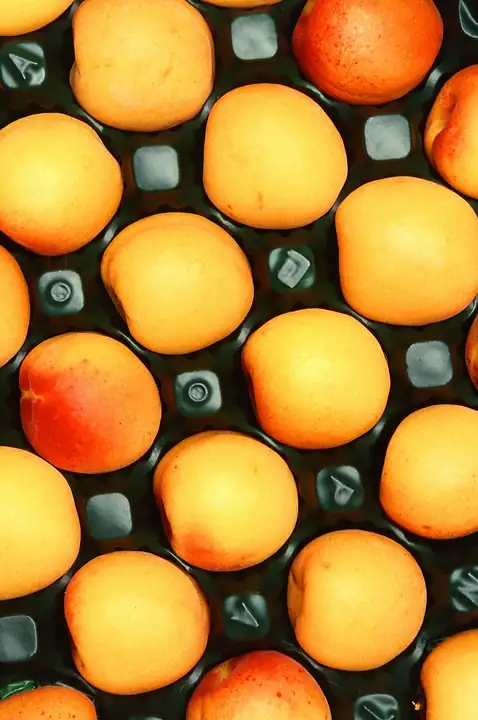
Apricot
Prunus armeniaca · Rose family (Rosaceae)
When to plant: Set out plants up to 4 weeks before the last frost.
| Hardiness zones | 4 to 8 |
|---|---|
| Sun | full sun |
| Water | moderate |
| Life cycle | perennial |
| Frost | Hardy: takes frost |
| Soil pH | 6.0–7.0 |
| Spacing | 144 to 264 inches |
About Apricot
Apricots are small-to-medium trees that are mostly self-fruitful, so one tree can bear. They bloom very early, so spring frosts often take the crop; in Utah, trees may fruit only 3 years out of 5.
Commonly grown in zones 5-8, with hardy varieties such as 'Moorpark', 'Goldrich' and 'Harglow' tolerating zone 4 (Utah State). Most need 600-900 chill hours below 45 F, though a few low-chill varieties bear with about 350 (UC Master Gardeners of Marin).
When to plant
Timing is counted from your average last spring frost (and first fall frost). Sow & Tell works out the actual dates for your ZIP code.
- Set out plants: up to 4 weeks before the last frost
Plant in early spring as soon as the soil is dry enough to work (UNH). Pick a site with good air drainage, because the early blossoms are easily killed by spring freezes (Utah State). Fruit forms on short spurs that stay productive for 3 to 5 years (Utah State).
Soil
Deep, well-drained, slightly acidic sandy loam; apricots tolerate little wet or heavy soil and may yellow (iron chlorosis) in alkaline soils.
Test the soil and aim for a pH of 6.0 to 7.0; apricots need good drainage and do poorly in wet, heavy soil.
Feeding
- Spring (May in New England) from the second year on, only if young shoots grew less than 10-20 inches last year (older trees less than 8-10 inches): nitrogen fertilizer such as 20-0-0, or a balanced fertilizer such as 16-16-16 if a soil test shows low phosphorus and potassium. Utah suggests 1/2-1 cup of 20-0-0 for trees under 5 years old and 1-2 cups for older trees, spread around the drip line; follow a soil test.
Look for: mostly nitrogen, in spring as growth starts. Spring feeding grows the new shoots and leaves that carry flowers and fruit; feeding after midsummer pushes soft growth that may not harden before winter.
Fertilizer does not fix every problem: skip it when growth is good, and do not overwater, which in alkaline soils leads to yellow leaves (iron chlorosis).
Harvest
Ripe apricots are slightly soft, and the skin turns from green to yellow, orange or red depending on the variety (Utah State); fruit matures about 100-120 days after full bloom (UC Master Gardeners of Marin).
Apricots give one crop a year, usually July-August, but their very early bloom is often frosted, so in Utah they fruit only about 3 years in 5. Thin grape-sized fruit to one every 4-6 inches for bigger fruit and a healthier tree.
Varieties (20)
| Variety | Type | Season and days | Zones | Notes |
|---|---|---|---|---|
| Goldbar | Cold-hardy | 4–8 | Very large, light yellow-orange fruit with a blush; good dessert quality. Vigorous tree. Flowers heavily but sets a light crop. Not self-fruitful. Sources: [2][7] | |
| Goldcot | Cold-hardy | 4–8 | Medium, nearly round fruit with golden skin and firm flesh. A seedling of Perfection. Somewhat self-fruitful. Sources: [7][8] | |
| Moongold | Cold-hardy | Late July | 4–8 | Medium, sweet, juicy freestone fruit. University of Minnesota release (1960); ripens before Sungold. Blooms very early, so late frost can take the crop. Plant with Sungold for pollen. Sources: [2][4][8] |
| Moorpark | Cold-hardy | July to August | 4–8 | Winter-hardy and blooms later than many; good fresh or processed. Utah State lists it as self-fertile. Nebraska warns early bloom can be hit by frost there. Sources: [2][8] |
| Perfection | Cold-hardy | 4–8 | Large oval fruit, yellow-orange to deep orange, with good texture and flavor. Very hardy. Sources: [2][7] | |
| Scout | Cold-hardy | Early August | 3–8 | Best for canning, preserves and drying. Rated very good in zone 4 and good in zone 3. Pollinize with Harcot, Moongold, Sungold or Westcot. Sources: [2][4] |
| Sungold | Cold-hardy | Early August | 4–8 | Small, sweet, mild yellow fruit with a red blush. University of Minnesota release (1960). Blooms very early, so late frost can take the crop. Plant with Moongold for pollen. Sources: [2][4][8] |
| Tilton | Cold-hardy | July to August | 4–8 | Winter-hardy, later-blooming apricot; good fresh or processed. Self-fertile. Sources: [2] |
| Tomcot | Cold-hardy | 4–8 | Medium to large orange fruit with firm flesh and dessert quality. Vigorous tree, but an early bloomer. Sources: [2][7] | |
| Westcot | Cold-hardy | Early August | 3–8 | Good for fresh eating. A favorite of cold-climate apricot growers; rated very good in zone 4 and good in zone 3. Hard to find. Pollinize with Harcot, Moongold, Scout or Sungold. Sources: [2][4] |
| Harcot | Cold-hardy (Har series) | Late July to mid-August | 4–8 | Sweet, good flavor; for fresh eating, preserves and drying. Canadian-bred; can be hard to find in US nurseries. Self-compatible, but a second variety raises fruit set. Sources: [2][4] |
| Hargrand | Cold-hardy (Har series) | Late July to mid-August | 4–8 | Sweet, good flavor. Canadian-bred Har series apricot. Self-compatible; better set with a partner. Sources: [2][4] |
| Harlayne | Cold-hardy (Har series) | Late July to mid-August | 4–8 | Sweet, good flavor. Canadian-bred Har series apricot. Self-compatible; better set with a partner. Sources: [2][4] |
| Harogem | Cold-hardy (Har series) | Late July to mid-August | 4–8 | Sweet, good flavor. Canadian-bred Har series apricot; suggested for southern New Hampshire. Self-compatible; better set with a partner. Sources: [2][4][5] |
| Royal Blenheim | Early-blooming | 6–8 | A popular apricot, but it blooms very early and is not winter-hardy in Utah. Self-fertile. Best where springs are mild. Sources: [2] | |
| Chinese (Mormon) | Late-blooming | July to August | 4–8 | Medium to large yellow-orange fruit with good flavor and texture. Blooms late, which helps it dodge spring frost. Heavy, early bearer. The dried pit holds a sweet edible kernel. Self-fruitful and pollinates other apricots. Sources: [2][7] |
| Goldrich | Late-blooming | July to August | 5–8 | Large oval fruit; bright orange skin and deep orange flesh. Among the latest to bloom. Resists winter injury. Utah State's main apricot table lists it as self-fertile, but its Box Elder County page says it needs a pollinizer; a second apricot is a safe bet. Sources: [2][5][7] |
| Harglow | Late-blooming | July to August | 5–8 | Winter-hardy; Utah State lists it among the latest to bloom, though Nebraska reports early bloom and frost losses there. Part of the Canadian Har series. Self-fruitful. Sources: [2][4][8] |
| Mandan | Manchurian type | 3–8 | Smaller fruit. Very hardy Manchurian-type apricot. Sources: [2] | |
| Rival | 5–8 | Large oval fruit with mild, deep orange flesh. Vigorous and productive, but blooms early. Needs a pollinizer. Sources: [2][7] |
Pests to watch for
Plum curculio, Peachtree borer, Aphids, Twospotted spider mite, Scale insects, Pocket gophers, Katydids, Ground squirrels, Obliquebanded leafroller, Apple maggot, Oriental fruit moth, Green June beetle (fig-eater), Tree squirrels
Diseases and problems
Brown rot, Bacterial canker, Powdery mildew, Frost and freeze injury, Iron chlorosis, Crown gall, Armillaria root rot
In the kitchen
Eaten fresh, dried, canned or made into preserves.
Keeping it: Refrigerate ripe apricots; Utah State says they can keep up to about 3 weeks, but flavor is best soon after picking. Ripen firm fruit at room temperature first.
Safety: The pits contain cyanide-forming compounds (amygdalin); do not crush or eat the kernels (NC State).
Pets: Toxic to dogs, cats and horses (ASPCA): stems, leaves and seeds contain cyanogenic glycosides, especially as leaves wilt; signs include brick-red gums, dilated pupils, trouble breathing, panting and shock
Sources
- plants.ces.ncsu.edu
- extension.usu.edu
- ucanr.edu
- extension.umn.edu
- extension.unh.edu
- aspca.org
- extension.usu.edu
- extensionpubs.unl.edu
Photo: Photo: Scott Bauer, USDA ARS, Public domain (USDA ARS), via Wikimedia Commons. Photo resized for the web.

Planting dates and advice are general guidance; check with your local Cooperative Extension office for your area.