
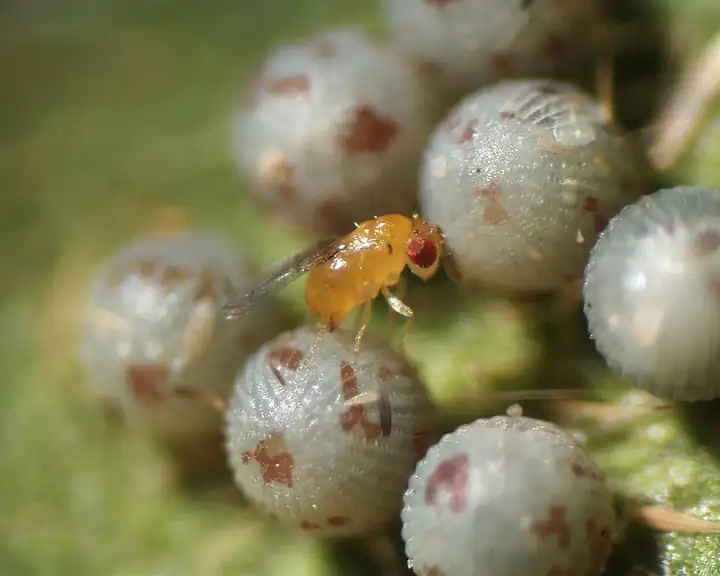
Trichogramma wasps
Trichogramma species, such as T. pretiosum, T. minutum, T. brassicae and T. platneri
| Type | Insect |
|---|---|
| What it does | Parasitoid |
| How common it is by region | Common here: Northeast, Southeast, South Central, Midwest, Great Plains, Mountain West, Southwest, Pacific Northwest, California |
About
Trichogramma are tiny wasps, less than a millimeter long, and they lay their eggs inside moth and butterfly eggs. The caterpillar never hatches, so the pest is stopped before it eats anything.
This one is already on your side. Broad sprays kill it along with the pest, which is why the guide puts sprays last.
What it eats
The wasp larva eats the developing caterpillar inside the egg. Hosts include eggs of hornworms, corn earworm, cabbage looper, imported cabbageworm, diamondback moth, codling moth and many other moths.
Pests it goes after
Cabbage looper, Codling moth, Corn earworm (tomato fruitworm), Diamondback moth, European corn borer, Imported cabbageworm, Oriental fruit moth, Spongy moth (formerly gypsy moth), Tobacco budworm (geranium or petunia budworm), Tomato hornworm, Tomato pinworm
Spotting it
How to find it early
The adults are too small to see well without a lens: yellowish or orange with red eyes. You are more likely to notice blackened moth eggs on leaves.
Its young
The young live inside the host egg, which turns dark or black a few days after it is parasitized. A small round exit hole means a wasp came out; a ragged hole in a pale egg means a caterpillar hatched.
When
Spring through fall; active year-round in mild climates where moth eggs are around
Bringing more of them in
Flowering plants that offer nectar help the adults live longer and lay more eggs. Avoid broad-spectrum insecticides and control ants, which attack natural enemies.
Buying it
UMN Extension says buying them is not worth it for most home gardens, because cards must go out right when pest eggs are present and often need repeat releases; UF calls their results mixed.
Worth knowing
They cannot sting people.
How common it is by region
| Northeast | Common here |
|---|---|
| Southeast | Common here |
| South Central | Common here |
| Midwest | Common here |
| Great Plains | Common here |
| Mountain West | Common here |
| Southwest | Common here |
| Pacific Northwest | Common here |
| California | Common here |
| Alaska | Occasional here |
| Hawaii | Occasional here |
Sources
Photo: Photo: Dr Victor Fursov / Wikimedia Commons, CC BY-SA 4.0 (CC BY-SA 4.0). Photo resized for the web.

Planting dates and advice are general guidance; check with your local Cooperative Extension office for your area.