
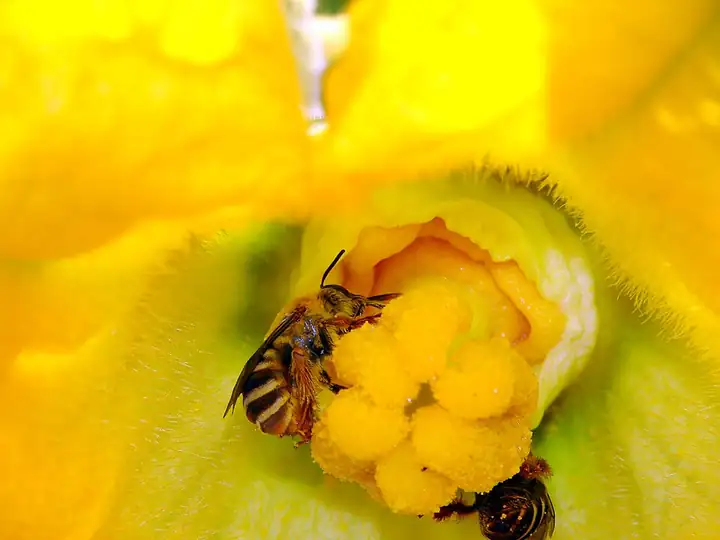
Squash bees
Eucera (formerly Peponapis) pruinosa, the pruinose squash bee, and related Xenoglossa species
| Type | Insect |
|---|---|
| What it does | Pollinator |
| When | Midsummer, while squash is blooming (June through August in North Carolina) |
| How common it is by region | Common here: Northeast, Southeast, South Central, Midwest, Great Plains, Southwest, California |
About
Squash bees are native bees that collect pollen only from squash, pumpkins and gourds. They start work at sunrise, before honey bees are out, and can do all the pollinating a squash patch needs.
This one is already on your side. Broad sprays kill it along with the pest, which is why the guide puts sprays last.
What it eats
They gather nectar and pollen from Cucurbita flowers: summer and winter squash, zucchini, pumpkins and gourds, but not cucumbers or watermelons. NC State says a female flower needs only 6 to 10 squash bee visits to be fully pollinated.
Spotting it
How to find it early
Check open squash flowers in early morning for bees a bit bigger and bulkier than honey bees, with long antennae and fuzzy hind legs. Males, which have a yellow spot on the face, often sleep inside closed blossoms.
Its young
Larvae grow in cells 6 to 12 inches underground, often right under the squash plants.
When
Midsummer, while squash is blooming (June through August in North Carolina)
Easy to mistake for
- Honey bee — Squash bees are bulkier, with longer antennae and fuzzy hind legs coated in loose pollen, and they come at dawn; honey bees have smooth hind legs with tidy pollen balls.
Bringing more of them in
Avoid tilling where squash grew, since the bees nest in the soil under the plants and tilling can kill them. Never spray insecticides on open squash flowers, and avoid systemic soil insecticides, which can show up in the pollen.
Plants that bring it in
How common it is by region
| Northeast | Common here |
|---|---|
| Southeast | Common here |
| South Central | Common here |
| Midwest | Common here |
| Great Plains | Common here |
| Mountain West | Occasional here |
| Southwest | Common here |
| Pacific Northwest | Occasional here |
| California | Common here |
| Alaska | Not found here |
| Hawaii | Not found here |
Sources
Photo: Photo: USDA ARS / Wikimedia Commons, Public domain. Photo resized for the web.

Planting dates and advice are general guidance; check with your local Cooperative Extension office for your area.