
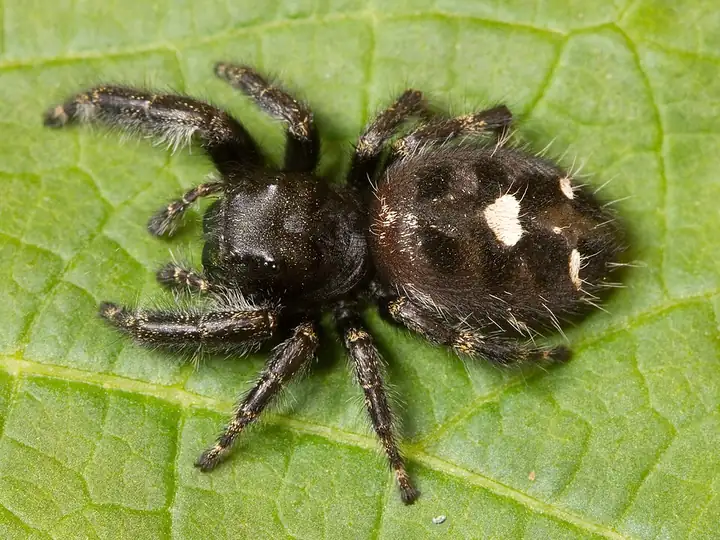
Jumping spiders
Family Salticidae; the bold jumper (Phidippus audax) is the one most often seen around U.S. homes and gardens
| Type | Spider |
|---|---|
| What it does | Predator |
| How common it is by region | Very common here: Northeast, Southeast, South Central, Midwest, Great Plains, Mountain West, Southwest, Pacific Northwest, California |
About
Jumping spiders are small, stocky, often fuzzy spiders with two huge front eyes, and they hunt by sight in broad daylight. They stalk insects on leaves, fences and porch rails and pounce on them, with no web involved.
This one is already on your side. Broad sprays kill it along with the pest, which is why the guide puts sprays last.
What it eats
A wide mix of insects, from aphids, scale insects and thrips to grasshoppers and moths, plus other spiders. When prey is scarce they will sip nectar and eat pollen.
Pests it goes after
Spotting it
How to find it early
Watch for a short, stocky spider that moves in quick, jerky hops. The bold jumper is black and fuzzy with white, yellow or orange spots on the abdomen and shiny green mouthparts. Common on sunny walls, deck railings, tree trunks and garden leaves.
Its young
Females lay eggs inside a small silk retreat. Spiderlings look like tiny copies of the adults.
When
Spring through fall; adults of the bold jumper are out in spring and early summer.
Bringing more of them in
Plant a variety of flowers, which give jumping spiders nectar and pollen when prey runs low, and avoid broad-spectrum insecticides.
Worth knowing
Shy and quick to retreat. A bite is rare and, per Penn State, causes at most minor pain, itching and redness for a day or two. Black widows and brown recluses are not jumping spiders.
How common it is by region
| Northeast | Very common here |
|---|---|
| Southeast | Very common here |
| South Central | Very common here |
| Midwest | Very common here |
| Great Plains | Very common here |
| Mountain West | Very common here |
| Southwest | Very common here |
| Pacific Northwest | Very common here |
| California | Very common here |
| Alaska | Occasional here |
| Hawaii | Common here |
Sources
- extension.psu.edu
- ohioline.osu.edu
- treefruit.wsu.edu
- ipm.ucanr.edu
- hort.extension.wisc.edu
- agsci.colostate.edu
Photo: Photo: Kaldari / Wikimedia Commons, CC0 (CC0). Photo resized for the web.

Planting dates and advice are general guidance; check with your local Cooperative Extension office for your area.