
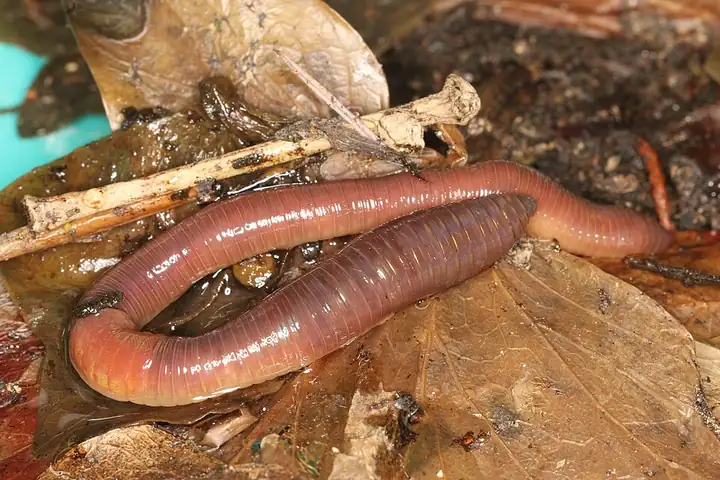
Earthworms
Family Lumbricidae and others; garden species include the nightcrawler (Lumbricus terrestris), smaller topsoil worms, and the red wiggler or manure worm (Eisenia fetida) used in compost bins
| Type | Worm or other invertebrate |
|---|---|
| What it does | Soil builder, Decomposer |
| How common it is by region | Very common here: Northeast, Southeast, Midwest, Pacific Northwest |
About
Earthworms tunnel through garden soil, eating dead plant material and leaving behind nutrient-rich castings. Their burrows let water and air in and give roots an easy path down, so a wormy bed is usually a healthy one.
This one is already on your side. Broad sprays kill it along with the pest, which is why the guide puts sprays last.
What it eats
Fallen leaves, crop residue and organic matter in the soil. Nightcrawlers pull leaves down into deep vertical burrows; other species feed in the top few inches of soil.
Spotting it
How to find it early
Dig a spadeful of moist soil in spring or fall, when they're most active, and look for worms and their burrow channels.
Its young
Each adult makes small cocoons with its collar-like band (the clitellum), mostly in spring or early summer. Young worms hatch in one to five months and take three months to a year to mature (Penn State).
When
Most active in spring and fall when soil is cool and moist; they go deep or rest in hot, dry summer weather.
Bringing more of them in
Add compost, manure and mulch, keep soil moist, and dig as little as you can. Avoid carbaryl and other carbamate or organophosphate insecticides, which are very toxic to earthworms.
Buying it
You don't need to buy earthworms for the garden; feed the ones you have with organic matter. Never buy worms sold as 'jumping worms,' 'Alabama jumpers,' 'snake worms' or 'crazy worms' (UMN Extension).
Worth knowing
Invasive jumping worms (Amynthas species from Asia) are a problem, not a friend. They thrash and jump when touched, have a smooth, milky-white band that circles the body about a third of the way back from the head, and turn topsoil into dry granules like coffee grounds. Bag and trash them, and don't share soil, mulch or plants from infested beds. Even common European earthworms can strip the leaf layer from northern forests, so never dump bait worms in the woods.
How common it is by region
| Northeast | Very common here |
|---|---|
| Southeast | Very common here |
| South Central | Common here |
| Midwest | Very common here |
| Great Plains | Common here |
| Mountain West | Common here |
| Southwest | Occasional here |
| Pacific Northwest | Very common here |
| California | Common here |
| Alaska | Occasional here |
| Hawaii | Common here |
Sources
Photo: Photo: Donald Hobern / Wikimedia Commons, CC BY 2.0 (CC BY 2.0). Photo resized for the web.

Planting dates and advice are general guidance; check with your local Cooperative Extension office for your area.