
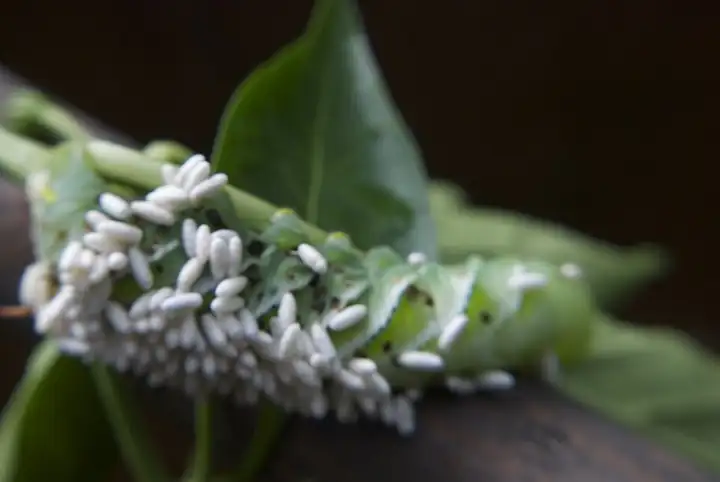
Braconid wasps (incl. hornworm cocoon wasps and aphid mummy wasps)
Family Braconidae, such as Cotesia congregata on hornworms and Cotesia glomerata on cabbageworms; the aphid parasites Aphidius and Lysiphlebus are close relatives, sometimes grouped as Braconidae and sometimes as their own family
| Type | Insect |
|---|---|
| What it does | Parasitoid |
| When | Late spring through fall |
| How common it is by region | Very common here: Northeast, Southeast, South Central, Midwest, Great Plains, Mountain West, Southwest, Pacific Northwest, California |
About
Braconids are tiny wasps that lay their eggs inside caterpillars, aphids and other pests, and the young eat the host from the inside. They are behind the white cocoons on hornworms and the puffy tan aphid 'mummies' you find on leaves.
This one is already on your side. Broad sprays kill it along with the pest, which is why the guide puts sprays last.
What it eats
Larvae grow inside a host and kill it. Cotesia wasps attack tomato and tobacco hornworms and imported cabbageworms, while aphid wasps turn aphids into mummies; adults sip nectar.
Pests it goes after
Spotting it
How to find it early
The adults are tiny dark wasps, about an eighth of an inch or less, with long antennae, so you mostly notice their work: cocoon-covered hornworms, yellow cocoon clusters near dead cabbageworms, and aphid mummies.
Its young
On a hornworm you may see dozens of small white, rice-like cocoons standing on its back. On aphid colonies, look for swollen, crusty tan or golden aphids; a round hole in the top means the new wasp has already flown.
When
Late spring through fall
Easy to mistake for
- Tomato hornworm — The small white cocoons standing on a hornworm's back are wasp cocoons, not hornworm eggs, so leave that caterpillar alone; it has stopped feeding and will die.
Bringing more of them in
Keep something in bloom all season, since adults rely on nectar and pollen to survive. Tolerate a few pests, avoid broad-spectrum insecticides, and leave cocoon-covered hornworms and mummies where they are.
Buying it
UMN Extension says buying parasitic wasps is rarely worth it for home gardens; making the yard welcoming for the wild ones works better.
Worth knowing
They do not sting or bite people.
How common it is by region
| Northeast | Very common here |
|---|---|
| Southeast | Very common here |
| South Central | Very common here |
| Midwest | Very common here |
| Great Plains | Very common here |
| Mountain West | Very common here |
| Southwest | Very common here |
| Pacific Northwest | Very common here |
| California | Very common here |
| Alaska | Common here |
| Hawaii | Common here |
Sources
Photo: Photo: Otto Phokus / Wikimedia Commons, CC BY-SA 2.0 (CC BY-SA 2.0). Photo resized for the web.

Planting dates and advice are general guidance; check with your local Cooperative Extension office for your area.