
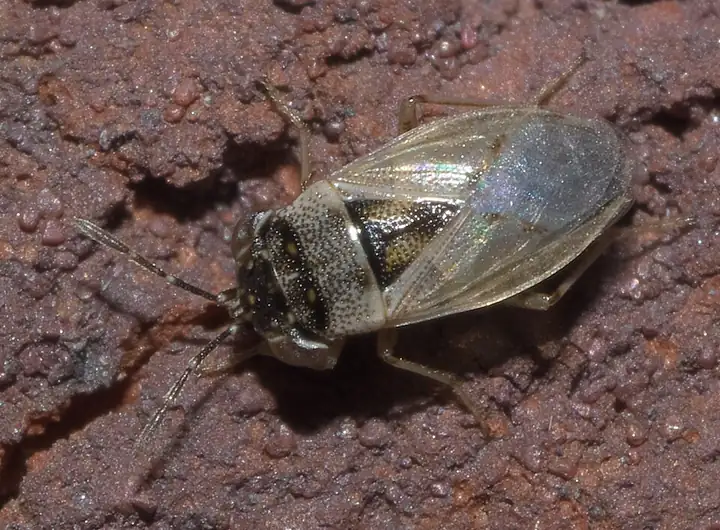
Big-eyed bugs
Family Geocoridae; Geocoris species such as G. punctipes, G. pallens and G. uliginosus
| Type | Insect |
|---|---|
| What it does | Predator |
| When | Spring through fall; adults spend the winter in leaf litter or under bark. |
| How common it is by region | Very common here: Southeast, South Central, Southwest, California |
About
Big-eyed bugs are small, oval true bugs with a wide head and bulging eyes that hunt on low plants in gardens and fields. They eat mites, aphids, whiteflies and insect eggs, and they don't harm plants.
This one is already on your side. Broad sprays kill it along with the pest, which is why the guide puts sprays last.
What it eats
Mites, aphids, whiteflies, thrips, flea beetles, insect eggs and small caterpillars such as young cutworms; they suck prey dry with a needle-like beak. An adult can eat dozens of mites a day, and they sip nectar, pollen and seeds when prey is short.
Pests it goes after
Aphids, Cutworms, Flea beetles, Thrips, Twospotted spider mite, Whiteflies
Spotting it
How to find it early
Gray, brown or black bugs about a quarter inch long or less, with a broad head and big eyes that bulge out to the sides; they walk with a little side-to-side waggle. Look on low-growing crops and flowers.
Its young
Nymphs look like smaller, wingless adults and are often paler. The tiny eggs are laid singly on leaves and stems and show two red eye spots before hatching.
When
Spring through fall; adults spend the winter in leaf litter or under bark.
Easy to mistake for
- Tarnished plant bug — Plant bugs like the tarnished plant bug have small eyes, a narrow head and longer antennae, while big-eyed bugs have a wide head with eyes bulging to the sides.
Bringing more of them in
Plant flowers that bloom all season, leave some leaf litter for winter shelter, and avoid broad-spectrum insecticides.
Plants that bring it in
Cosmos, Fennel, Goldenrod, Mint
Buying it
Sometimes sold, but extension advice centers on keeping the local ones fed with season-long flowers and fewer sprays.
How common it is by region
| Northeast | Common here |
|---|---|
| Southeast | Very common here |
| South Central | Very common here |
| Midwest | Common here |
| Great Plains | Common here |
| Mountain West | Common here |
| Southwest | Very common here |
| Pacific Northwest | Common here |
| California | Very common here |
| Alaska | Occasional here |
| Hawaii | Occasional here |
Sources
Photo: Photo: xpda / Wikimedia Commons, CC BY-SA 4.0 (CC BY-SA 4.0). Photo resized for the web.

Planting dates and advice are general guidance; check with your local Cooperative Extension office for your area.