
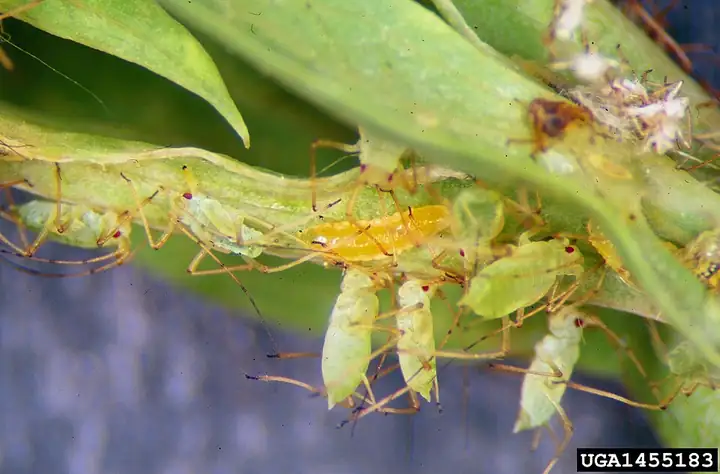
Aphid midge
Aphidoletes aphidimyza
| Type | Insect |
|---|---|
| What it does | Predator |
| How common it is by region | Common here: Northeast, Southeast, South Central, Midwest, Great Plains, Mountain West, Pacific Northwest, California |
About
The aphid midge is a tiny, mosquito-like fly whose bright orange larvae hunt aphids. It is native to much of North America and feeds on more than 60 kinds of aphids.
This one is already on your side. Broad sprays kill it along with the pest, which is why the guide puts sprays last.
What it eats
Larvae bite aphids at the leg joints, paralyze them and suck them dry, leaving blackened, shriveled aphids behind. Cornell says a larva needs at least 7 aphids to grow up and may eat up to 80, and it kills more than it eats.
Pests it goes after
Spotting it
How to find it early
You will almost never see the adults, which fly at night. Look instead for little orange maggots among aphids and for dead aphids that have turned black and collapsed.
Its young
Eggs are minute orange ovals laid among aphids. The larvae are small orange to red maggots, only about a tenth of an inch long when grown, sitting right in aphid colonies.
When
Late spring through late summer; shorter days in late summer send larvae into the soil for winter
Bringing more of them in
Adults feed on aphid honeydew and do best with humidity and shelter from heat and wind. Keep the soil a little moist for the larvae to pupate in, and avoid sprays, which kill most midges.
Buying it
They are sold as pupae in moist packing, but Cornell notes most sprays kill them and they need moisture and shelter to settle in, so protecting wild ones usually matters more.
How common it is by region
| Northeast | Common here |
|---|---|
| Southeast | Common here |
| South Central | Common here |
| Midwest | Common here |
| Great Plains | Common here |
| Mountain West | Common here |
| Southwest | Occasional here |
| Pacific Northwest | Common here |
| California | Common here |
| Alaska | Occasional here |
| Hawaii | Occasional here |
Sources
Photo: Photo: Whitney Cranshaw, Colorado State University / Wikimedia Commons, CC BY 3.0 US (CC BY 3.0 US). Photo resized for the web.

Planting dates and advice are general guidance; check with your local Cooperative Extension office for your area.